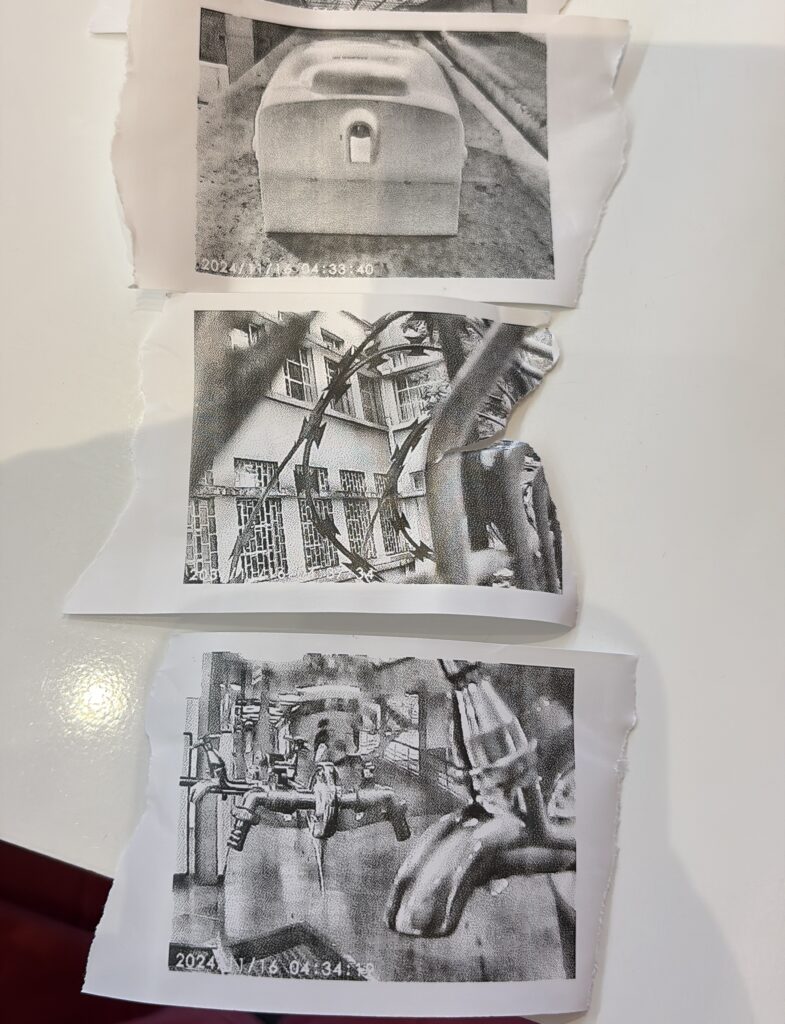
It is a photograph taken from an existing technology that makes it look like a futuristic technology, usually taken with a macro lens and close framing not to be entirely recognizable. Can be used as a quick Speculative Design exercise or as a Cultural Probe. It is useful for engaging people who are not used to imagining future realities. Text labels or stories can direct the interpretation of the ambiguous images.
Examples from PUCPR students, collected over a week of observation and reflection on the neglected futures of Curitiba (Van Amstel and Gonzatto, 2021).
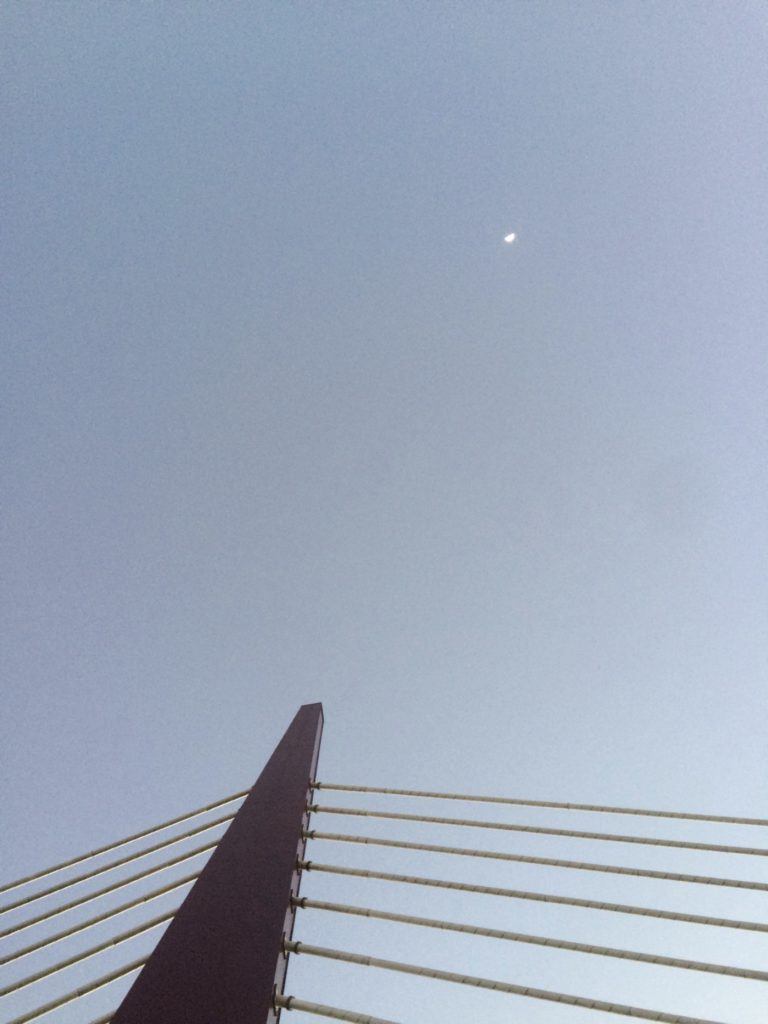
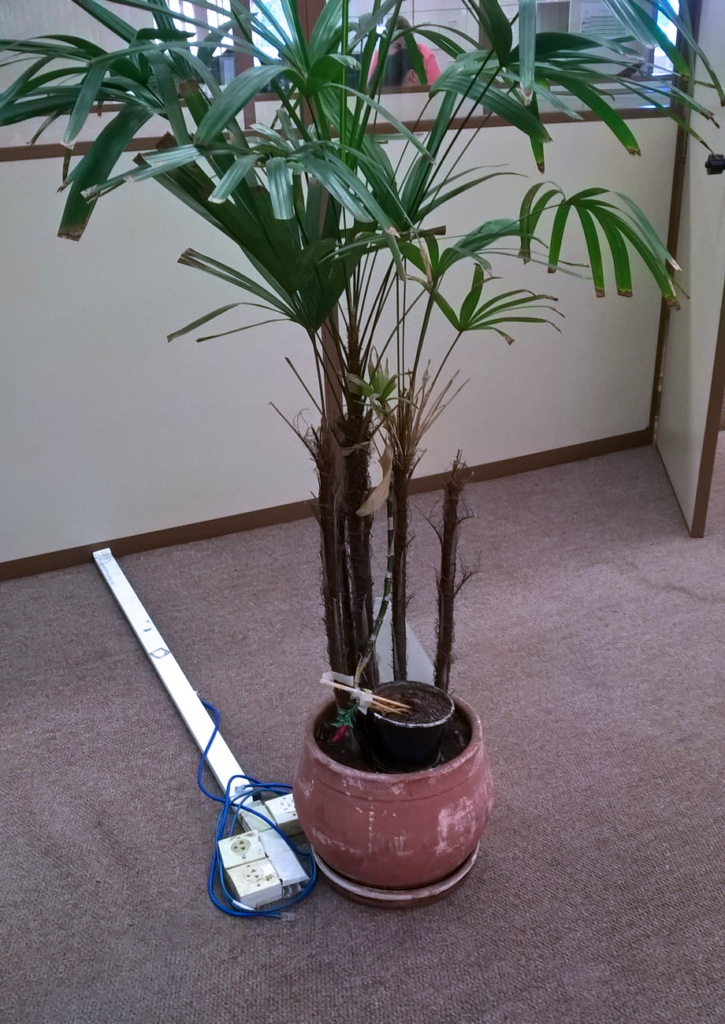
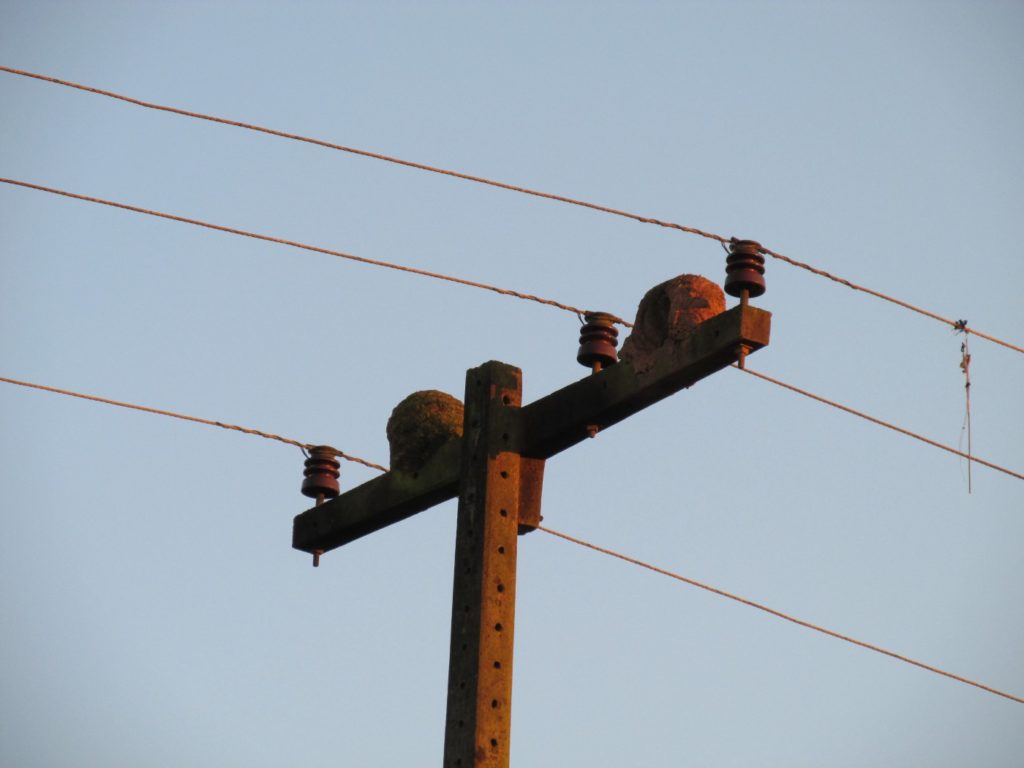
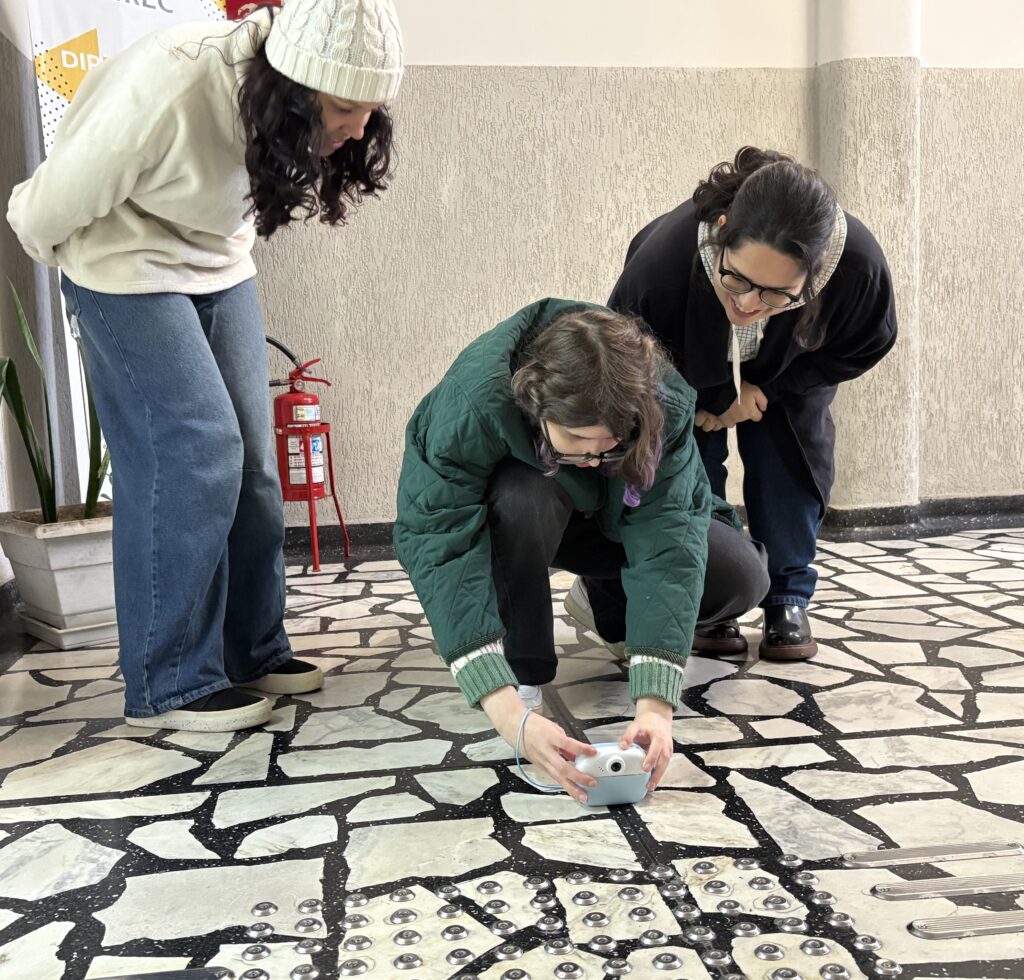
Anachronistic photo is also a great group assignment for a speculative design workshop. Taken with a thermal instant kid’s camera, the assignment provides a quick-and-dirty dive into speculative design. Virtually anyone can start speculating on design fictions based on existing objects and places, reframed by unusual angles.
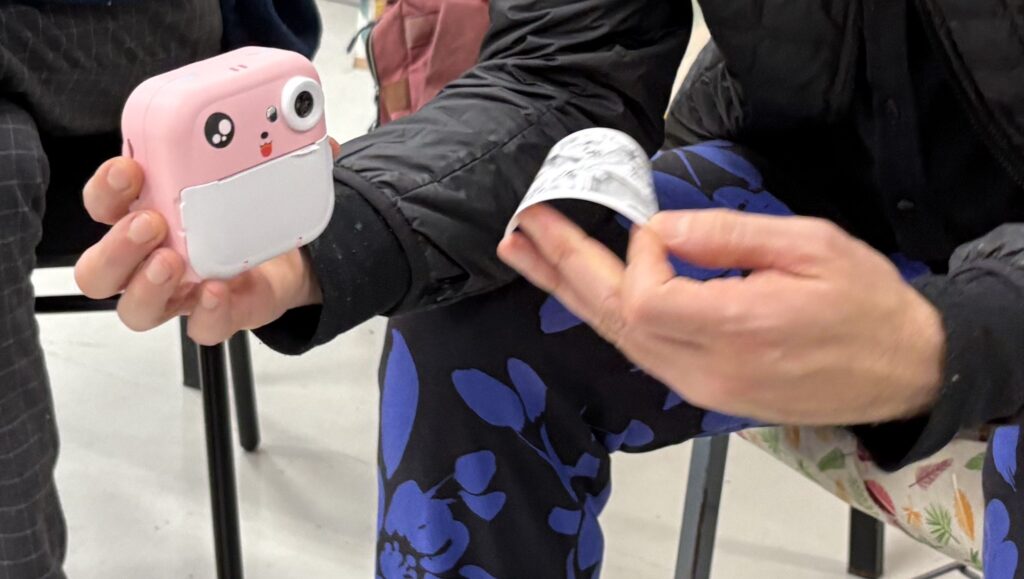
The instant camera is fast to set up and learn, and it requires multiple collaborative hands to work. Moreover, its grayscale dithering effect prevents immediate recognition of the original object, opening the perception to the design fiction’s suspension of disbelief. Doing this assignment in public spaces is particularly advisable, as passersby are typically curious about what is being photographed, thereby increasing its performative aspect. Taking a picture of the future in the present is a somewhat enticing explanation that draws people to such workshops.
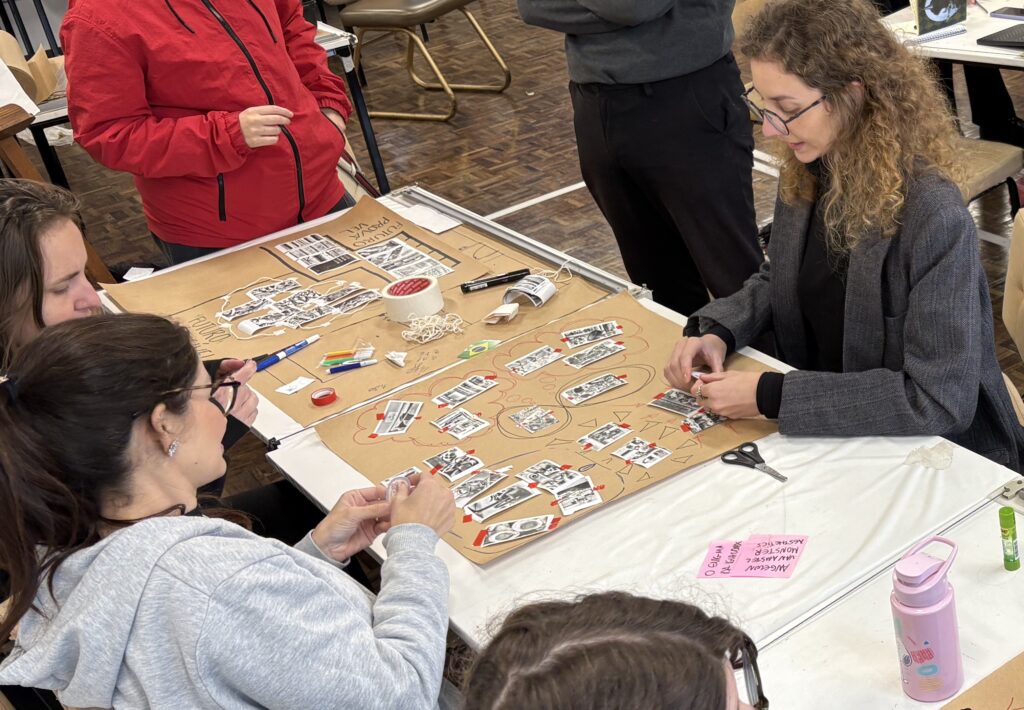
After a pre-defined time span, participants return to the studio to share their photos and compose a comprehensive design fiction by laying the pictures on a wall or brown paper. Annotation provides visual context and connection so that the narrative can be constructed in many ways. The final step is recording a smartphone improvised video in which the whole group tells the story by showing the images they produced in the most appropriate order.
References
Van Amstel, Frederick M. C. and Gonzatto, Rodrigo Freese. (2021). Existential time and historicity in interaction design. Human-Computer Interaction. DOI: https://doi.org/10.1080/07370024.2021.1912607