Lego Serious Play is a relational and material approach to engaging groups in sense-making, co-design, and reflective assessment, developed by the Lego Group, some of its consultants, and creativity researchers. This method is based on metaphorical language, in which objects represented with plastic materials on a board, table, or hand do not reflect their exact shapes but instead represent deeper concepts. By relating different bricks to convey a concept, it is possible to create complex metaphors that help name aspects of the world for which there aren’t readily available words.
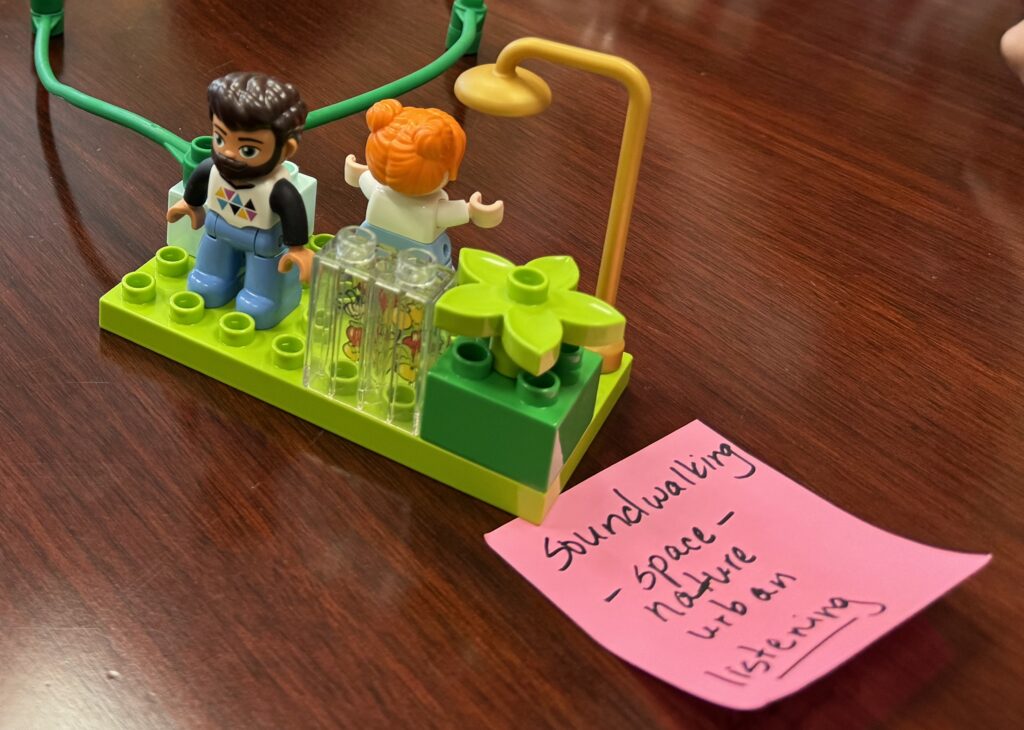
A key aspect of the method is building in silence without using words, which can be considered restricting when dealing with unstable knowledge. Only after building and reflecting can the participants name their concept using verbal or written expression. The Lego bricks act as a bridge between embodied experience (a.k.a. tacit knowledge) and linguistic expression.
Hands-on construction with bricks is not a metaphor for playfulness alone but a modality for thinking that externalizes internal experience, allowing participants to read and transform their worlds in physical form and then translate those readings into collective language.
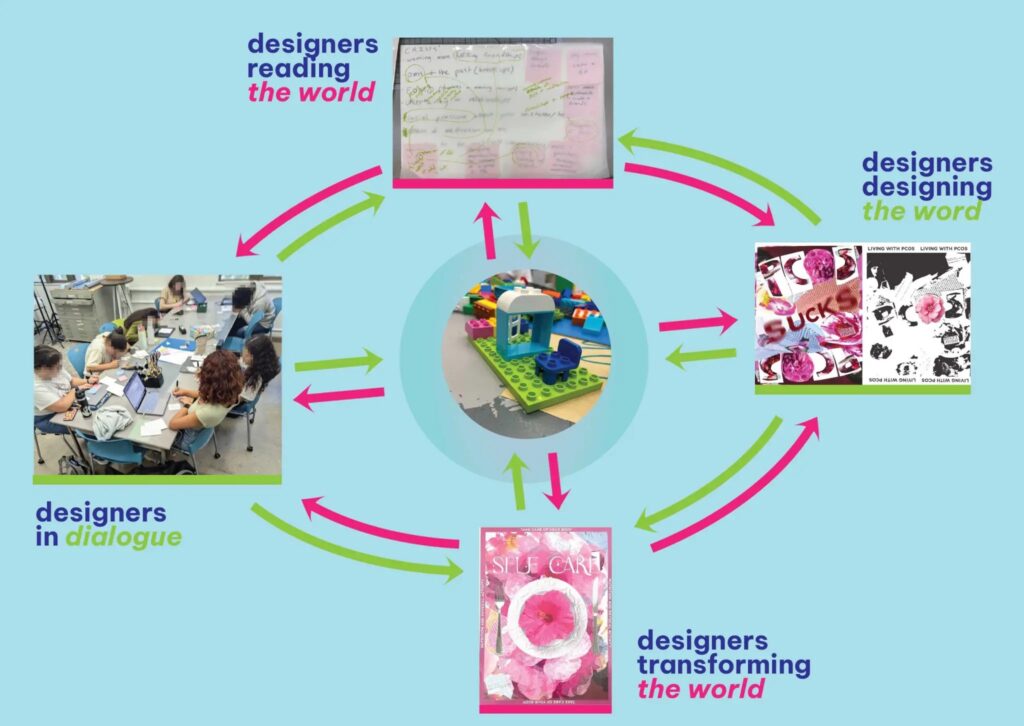
In this method, the act of building is inseparable from storytelling. After constructing a model, participants are invited to narrate their builds, attending to what the model’s elements represent, how they relate to one another, and what larger patterns they gesture toward. Telling the story of a model draws out nuances of interpretation, surfaces differing perspectives, and allows the group to enter into a shared dialogical space where meanings can be negotiated.
In educational settings, rather than starting with disciplinary language and then asking students to apply it, the method invites students to surface their own ways of seeing the phenomena in question and to weave academic concepts into that emerging fabric of understanding, only then. This cultivates not only cognitive insight but also ownership over interpretive frameworks, making the learning process visible and negotiable rather than opaque and transmissive.
Lego Serious Play can also be used for learning assessment. A metaphorical model presentation, together with the narrative it offers, functions as evidence of their learning process in a much more authentic, spontaneous, and complex way than a standard slide presentation. Sometimes, the model can be used together with the slide presentation or as slide content.
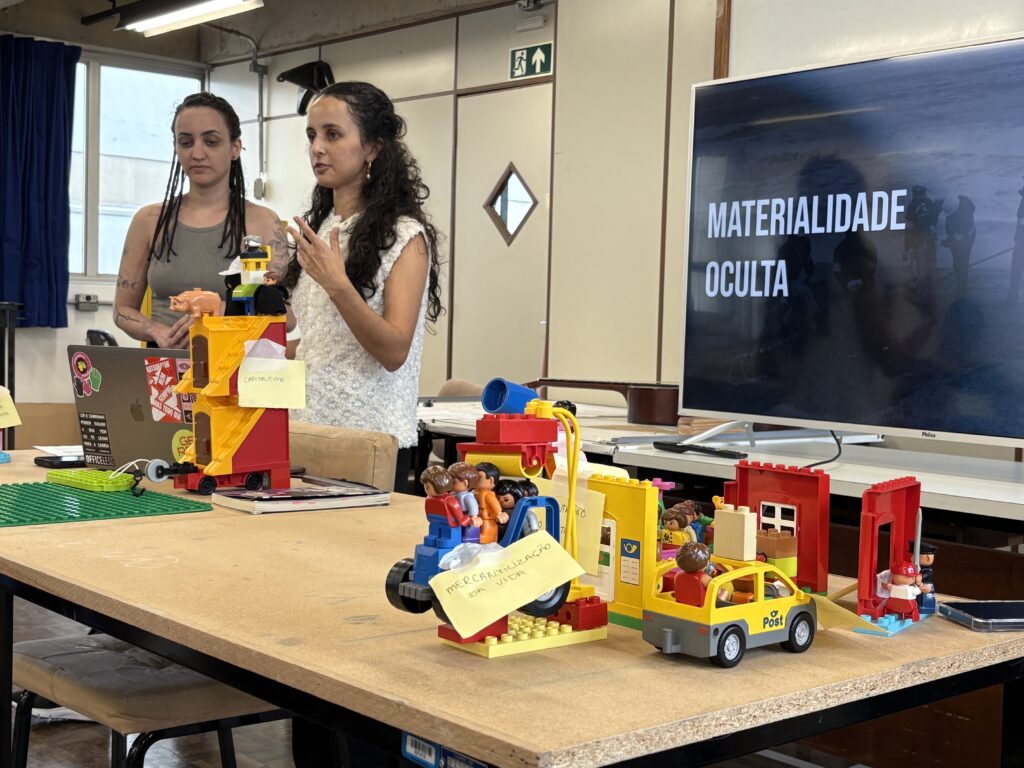
By externalizing internal mental models into physical forms laid out in shared space, LEGO Serious Play makes visible what would otherwise remain cognitive or tacit. This externalization supports group sense-making, clarifies differences in interpretation, and provides a basis for aligning shared understanding—a critical step in co-design and in participatory learning.
References
Paschoalin, Larissa and Van Amstel, Frederick M.C. (2021). Materialidade no codesign: análise interacional de um experimento com blocos de montar (Codesign Materiality: interactional analysis of a building blocks experiment). Design e Tecnologia, 11(23). https://doi.org/10.23972/det2021iss23pp82-92
Andrade Tavares, P., Freese Gonzatto, R., and van Amstel, F.M. (2026) Collective handiness in prospective design: philosophical musings on a serious play workshop on articulation work, in Simeone, L., Gray, C. M., Verhoeven, A., de Götzen, A., Bakırlıoğlu, Y., Zohar, H., Stead, M., and Buwert, P. (eds.), DRS2026: Edinburgh, 8–12 June, Edinburgh, United Kingdom. https://doi.org/10.21606/drs.2026.2538