Building information modeling
-
The social production of design space
Van Amstel, F.M.C; Hartmann, T; Voort, M. van der and Dewulf, G.P.M.R. The social production of design space, Design Studies, 46, 2016, p. 199–225. DOI: https://doi.org/10.1016/j.destud.2016.06.002 - May 2, 2016 -
Expensive or expansive? Learning the value of boundary crossing in design projects
Amstel, F. M.C. van; Zerjav, V; Hartmann, T; Dewulf, G.P.M.R; Voort, M.C. van der. 2016. Expensive or expansive? Learning the value of boundary crossing in design projects. Engineering Project Organization Journal, 6 (1), Pages 15-29. DOI: https://doi.org/10.1080/21573727.2015.1117974 - Nov 18, 2015 -
The homogenization of differences
The competition for exchange value has shaped the space of capitalist societies. In order to compete in the global market, the land, the cities, and the homes are becoming more alike across the world. People are trying to use space in similar ways due to the possibility of surviving from exchanges in the global market. This phenomenon […] - Jul 17, 2015 -
The alienation of design possibilities
The progressive contraction of design representations is synchronized with the alienation of design possibilities. Alienation means that some of the design possibilities are taken out of the design space and, therefore, never considered. These possibilities are put aside for being unacceptable, unthinkable, or unknown. This can happen by many reasons. In the socialization of the […] - Mar 16, 2015 -
The socialization of the design space
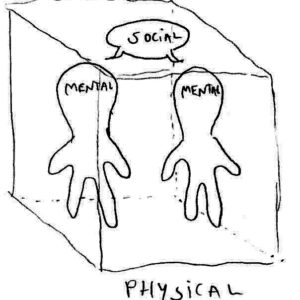
The expansion of the design object from materials to experiences is synchronized with the socialization of the design space. The design space can be understood in three ways: Saying that, I believe there is a strong link between the physical, the social and the mental, one feeding the other. In that sense, the design space […] - Mar 16, 2015 -
The contraction of design representations
In the last post, I described the expansion of the design object in the last centuries. This process is followed by another historical change in the opposite direction. Instead of expanding together with the object, the design representations are becoming smaller and more precise. The representations are being contracted in the hopes of corralling the […] - Mar 12, 2015 -
Expanding the representation of user activities
Van Amstel, F. M.C., Zerjav, V., Hartmann, T., van der Voort, M. C., & Dewulf, G. P. (2015). Expanding the representation of user activities. Building Research & Information, 43(2), 1-16. DOI: https://doi.org/10.1080/09613218.2014.932621 - Jul 15, 2014 -
The Expansive Hospital Game (2013)
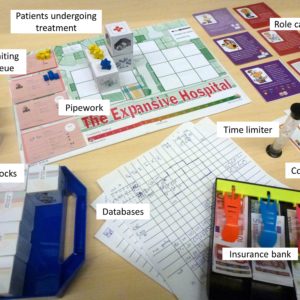
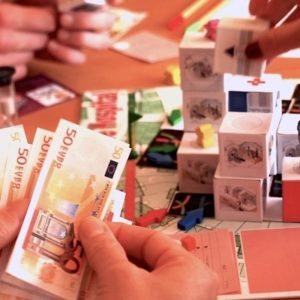
The Expansive Hospital is a board game in which players collaborate and compete to build a hospital with plastic blocks. The game design is based on research conducted with three healthcare construction projects in the Netherlands, commissioned by Pioneering. The research found that hospital design is often over schedule due to the conflicts of interests […] - Nov 12, 2013 -
Walking paths parametric design tool (2012)
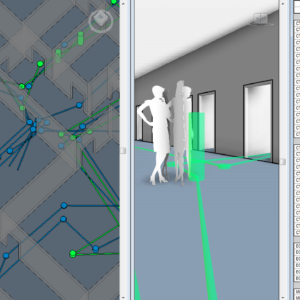
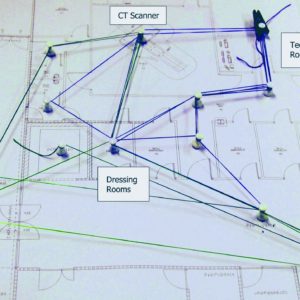
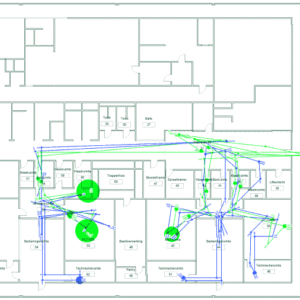
Walking Paths is an extension for Autodesk Revit, an industry standard tool for architectural design. The extension allows tracing the paths that patients, nurses, and other users should follow inside a facility. The application provides objective criteria to evaluate the work efficiency of a particular facility design. Walking_Paths [RFA] An Autodesk Revit parametric design family […] - Dec 13, 2012 -
How to knit spatial layout with workflow
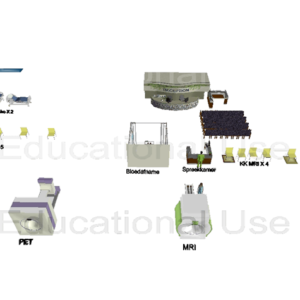
After realizing that the use situation is more complicated than what they thought, the managers from the CMI project organized a second user workshop to check if the current floor plan fits the workflow of scanning patients in machines such as EGG, PET-MRI, MRI, and CT. In the last workshop, a lot of time was […] - Oct 2, 2012 -
The uses of the human body in CAD
Yesterday I was in Germany for a collaborative meeting with some researchers working with computing and spation reasoning. I presented a poster outlining the challenges of my PhD research. Schloss Etelsen, the venue, couldn’t be better for reflecting about space abstract modeling. Look at the site: Coincidence or not, the 19th century castle had been […] - Jul 1, 2011