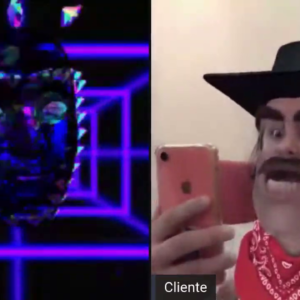
Object Theater is an extension of Theatre of the Oppressed that scrutinizes technology-mediated oppression and its symbolic and sensitive dimensions. Building upon the dramatic games developed by Augusto Boal that already engage everyday objects, Object Theater elevates the practice to a full-blown technique, including the possibility of generating an interactive play, similar to the Image Theater and Forum Theater techniques.
The preparatory sequence begins with The Found Object game. Participants bring personal objects and collectively arrange them in space according to intuitive aesthetic judgments, such as ‘beautiful’ and ‘ugly’. The categorization is intentionally unstable. Once an initial ordering is established, the group interrogates whether any coherent pattern justifies the arrangement, exposing how taste, value, and normativity operate as socially constructed filters rather than intrinsic properties. The exercise then proceeds through successive reclassifications — expensive and inexpensive, gendered and ungendered, useful and useless — emphasizing that objects carry layered cultural codings. This destabilization is not merely cognitive; it primes participants to perceive material culture as a site where oppressive ideology becomes tangible.
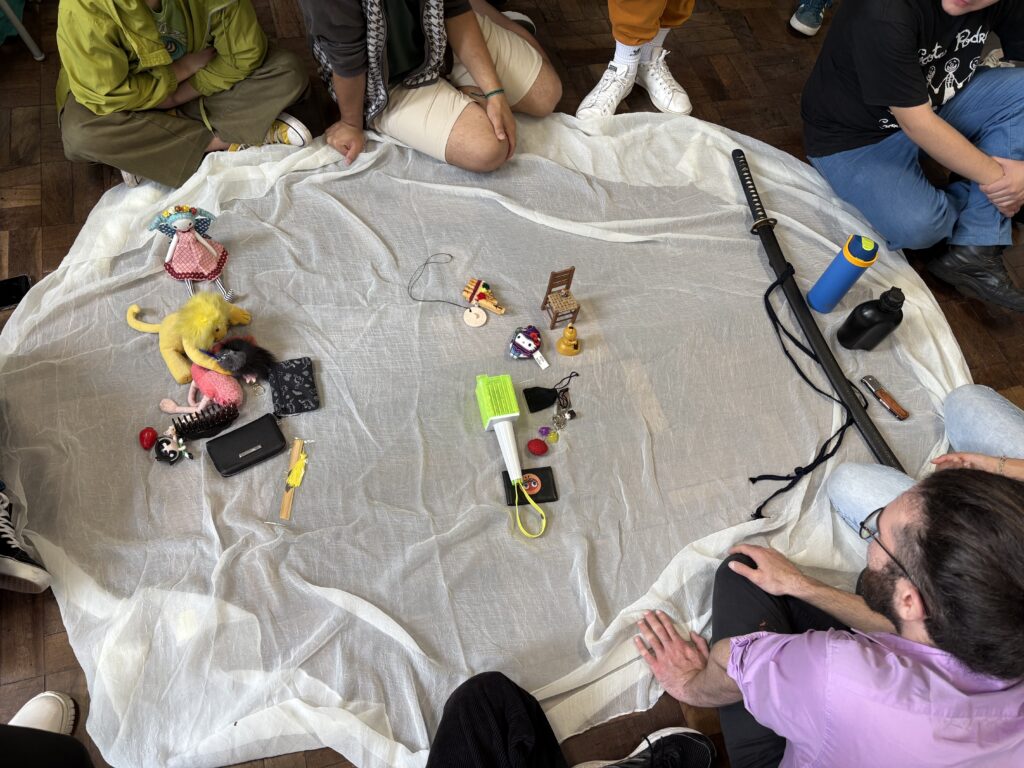
Where Is My Object deepens the shift from discursive reasoning to embodied signification. Without verbal negotiation, participants compose an aesthetic field using the objects. Each participant responds to prompts — which object they desire, reject, or are compelled to use — by physically approaching an object and constructing a moving image that demonstrates its use. Meaning emerges through posture, rhythm, and gesture rather than explanation. The silence is methodologically central: it suspends rational justification and foregrounds tacit knowledge, affective orientation, and bodily interpretation. Objects become relational anchors through which participants project attraction, aversion, and obligation.

Tribute to Magritte, expressed through the proposition “This bottle is not a bottle,” explicitly activates semiotic disobedience. Beginning with a neutral artifact such as an empty plastic bottle, participants redefine the object through bodily interaction, transforming it into multiple entities — an infant, a weapon, an instrument, a device. Repeating the exercise with structurally different objects, such as a chair or table, expands the perceptual flexibility required for Object Theater. Participants learn to detach objects from utilitarian determinism and perceive them as carriers of potential narratives. This game can be played remotely using a whiteboard application.

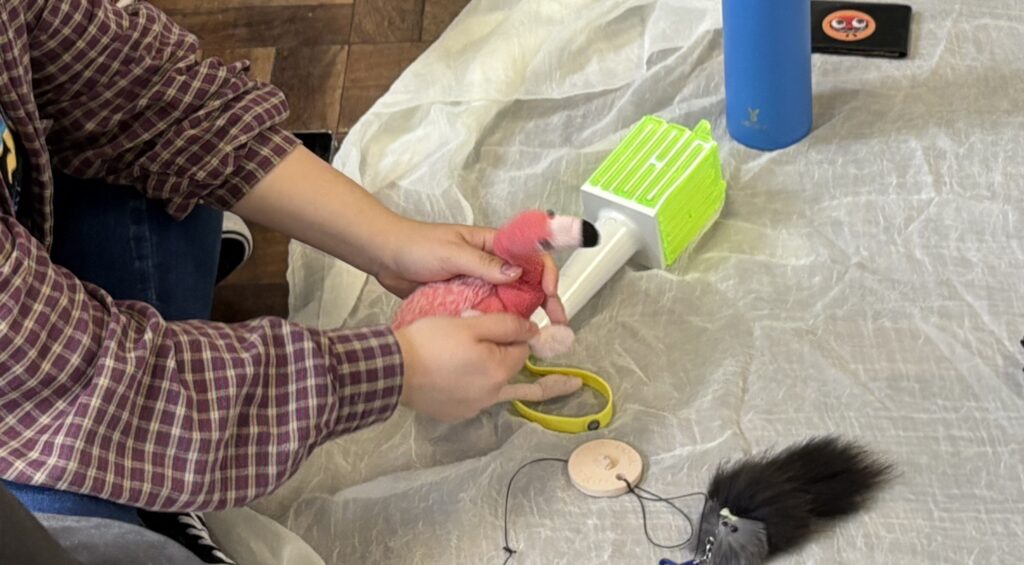
Creating a Character from an Object marks the transition from symbolic reinterpretation to performative construction. Participants select unfamiliar objects and derive characters from their perceived movement qualities, sonic possibilities, and implied voices. Agency is displaced: the performer does not play a human character using an object, but the object as a human character, taking into consideration its physical and symbolic capabilities and limitations.
The Improvised Object Theater consolidates prior exercises into collective dramaturgy. Objects are displayed on a table that serves as a repository of latent roles, while a separate table defines the stage. Participants, acting as spect-actors, enter the performance space sequentially, selecting objects and enacting the characters they have constructed. Narrative coherence arises through interaction rather than scripting. Because objects mediate entry into the scene, participants can introduce sensitive themes — authority, exclusion, desire, stigma — with reduced interpersonal vulnerability. The dramatic conflict is experienced as a system of relations among material proxies rather than as direct autobiographical disclosure.
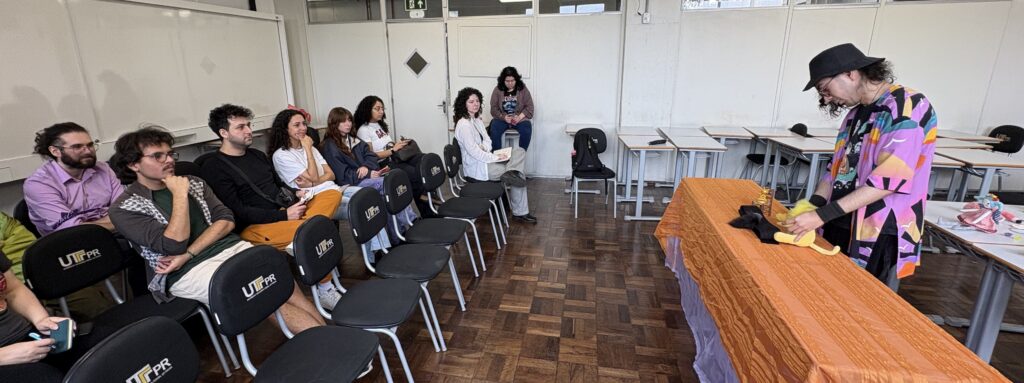
Similar to Forum Theater, Improvised Object Theater welcomes audience participation. At any time, a spect-actor can grab an object from the resource table behind and join the play. Instead of stopping to discuss actions, as in Forum Theater, the improvisation goes on and on, generating new conflicts by introducing new characters or new motivations.
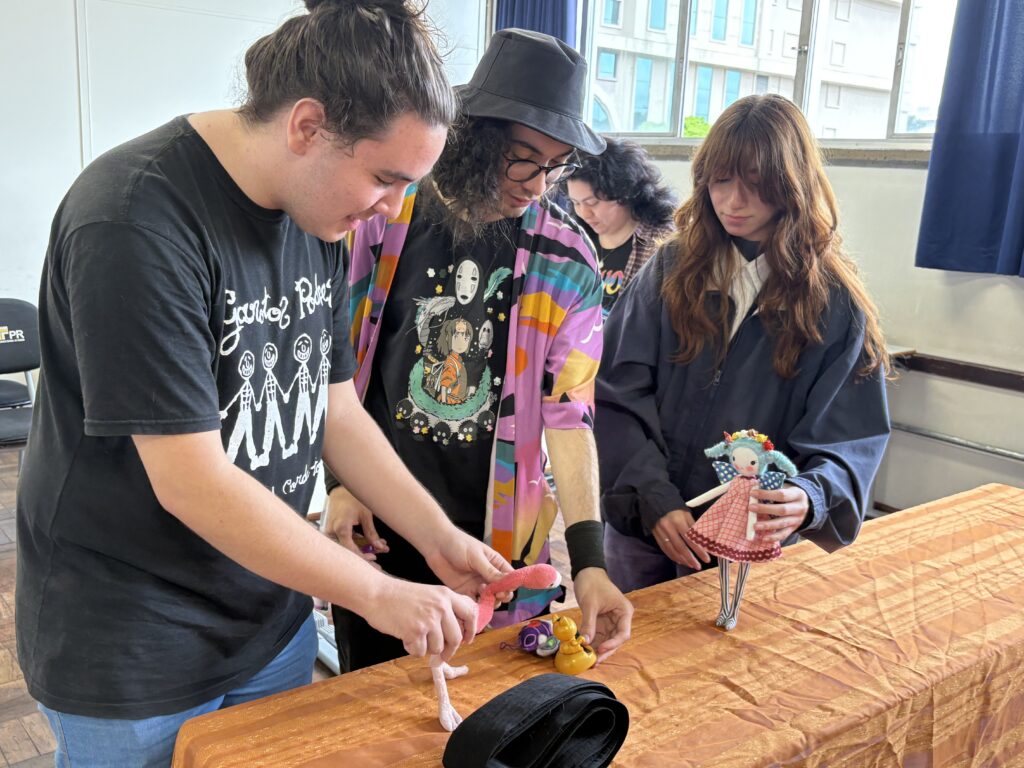
Object Theater mobilizes three dynamics. First, it renders ideology perceptible through material culture, exposing how objects encode social classifications. Second, it transfers expressive agency from individuals to artifacts, lowering defensive barriers and facilitating engagement with difficult subjects. Third, it constructs a reflective loop in which embodied action precedes conceptual articulation, allowing participants to discover rather than declare meaning.
This technique clarifies how identities, values, and conflicts are mediated by artifacts, revealing oppression as something enacted through arrangements of bodies, objects, and interpretations rather than solely through explicit discourse.