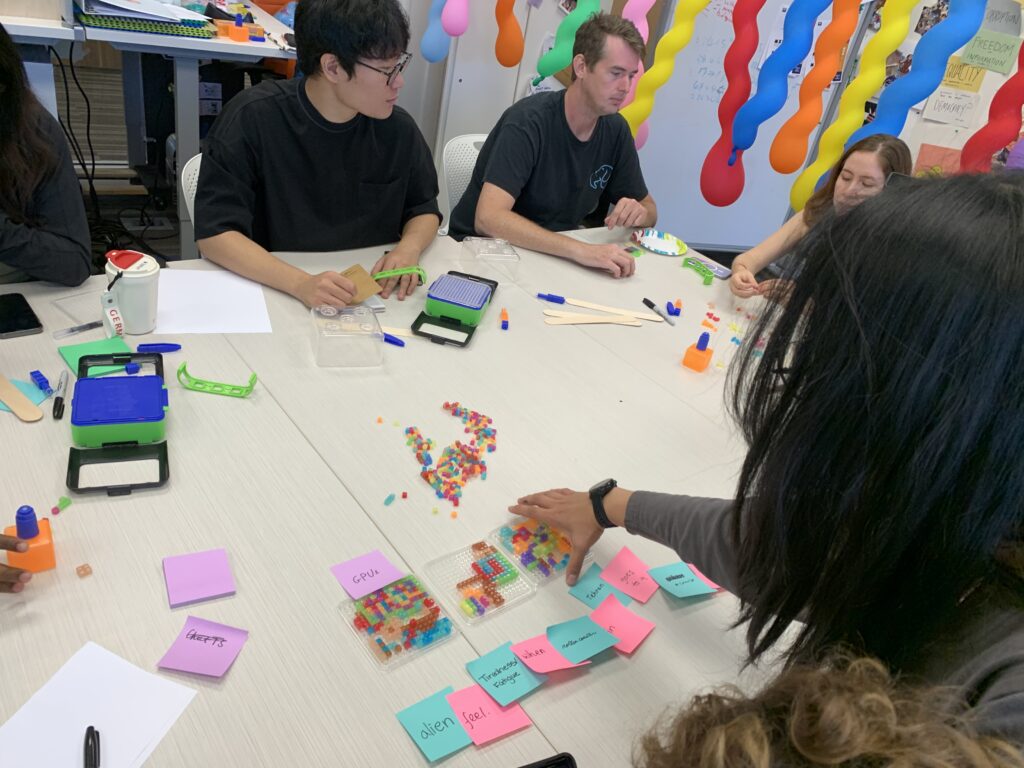
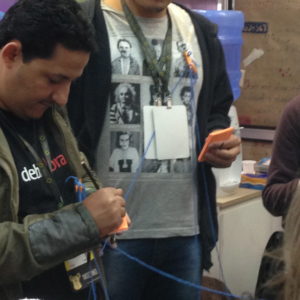
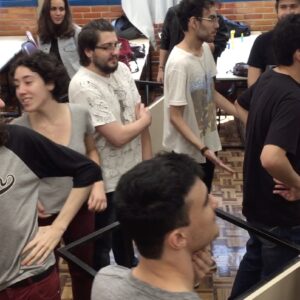
Pixelated Dreams is a collaborative surrealist game designed to help people grasp the stable diffusion algorithm behind generative AI such as DALLE, MidJourney, and others. As an embodied algorithm simulation, the game turns an invisible computational process into a physical, social activity where players collectively perform the roles normally executed by a machine using their bodies. This game uses Pixobitz beads fusion toy. Similar toys can be used.
1. Training the machine
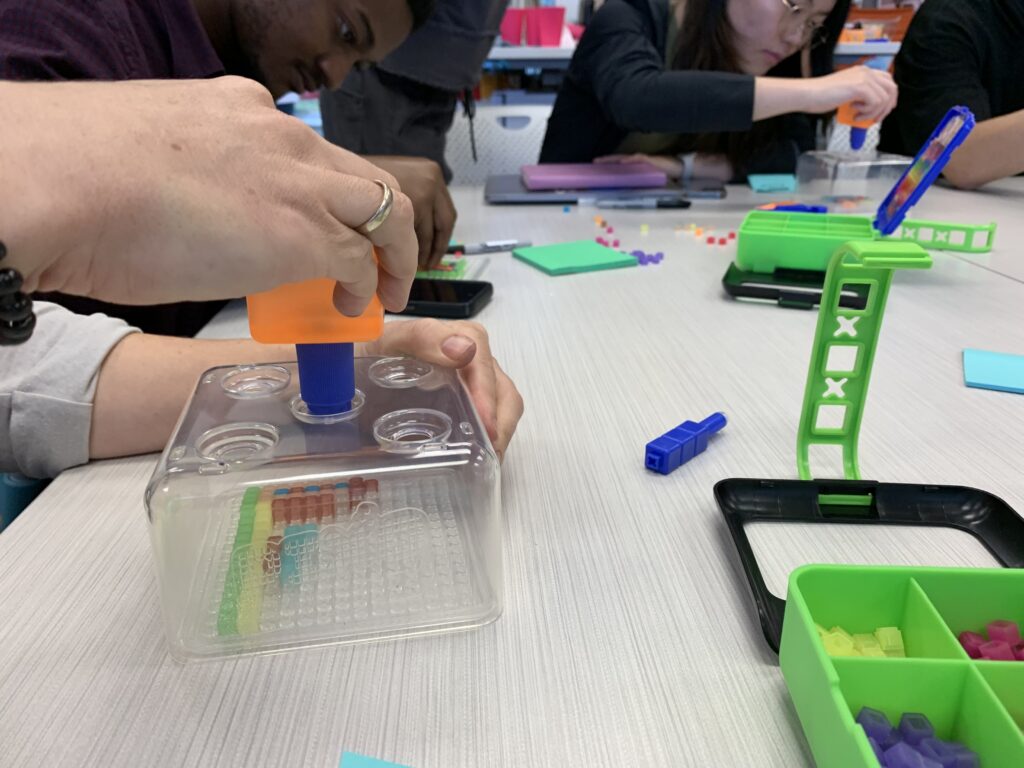
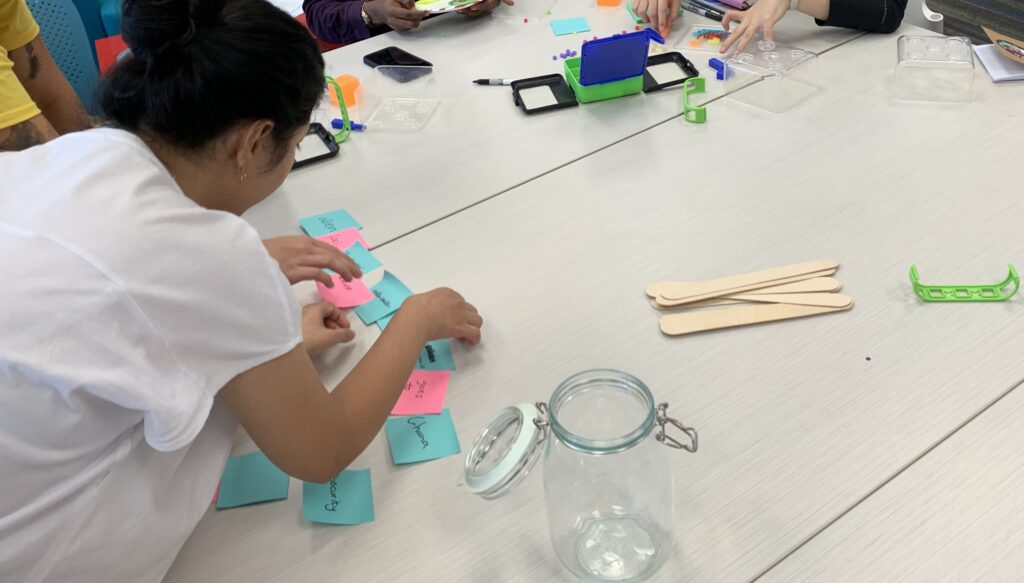
The experience begins with a common surrealist theme: dreams. Each participant recalls a recent dream and translates it into a tiny, low-resolution image using colored beads. If they don’t remember any dream, they can rely on the last dream someone shared with them. Because the images are intentionally crude and blocky, players must simplify, omit details, and decide what really matters. They also write one keyword in a blue sticky note that names their dream and turn the image readable by a semantic network. All individual bead-images are placed together, forming a shared pool of visual fragments. At this stage, the dreams stop belonging purely to individuals and become raw material for recombination.

Images are then sprayed with water, triggering the beads fusion process. Players must wait a few minutes—not too long—when beads are sticky but no yet fully fused.
2. Prompt engineering
One player or a group of players take on the role of prompt engineers. They cannot create new images directly; instead, they work by selecting and combining keywords from the group’s dreams. These new words were written on pink sticky notes. The prompt engineers then compiled these labels and words to generate a new dream—a more complex one. They didn’t need to use all the labels. By rearranging these labels, they produce unexpected conceptual mixtures — collective dream descriptions that no single participant authored. This stage demonstrates a key insight: generative systems do not “imagine” freely; they reorganize existing material according to instructions.
3. Noising
The images corresponding to the selected keywords are put inside a jar while being roughly torn apart and mixed. The stickiest part of the images remain intact. This is called noising, when random pixels are added to an image while still preserving the semantic association.
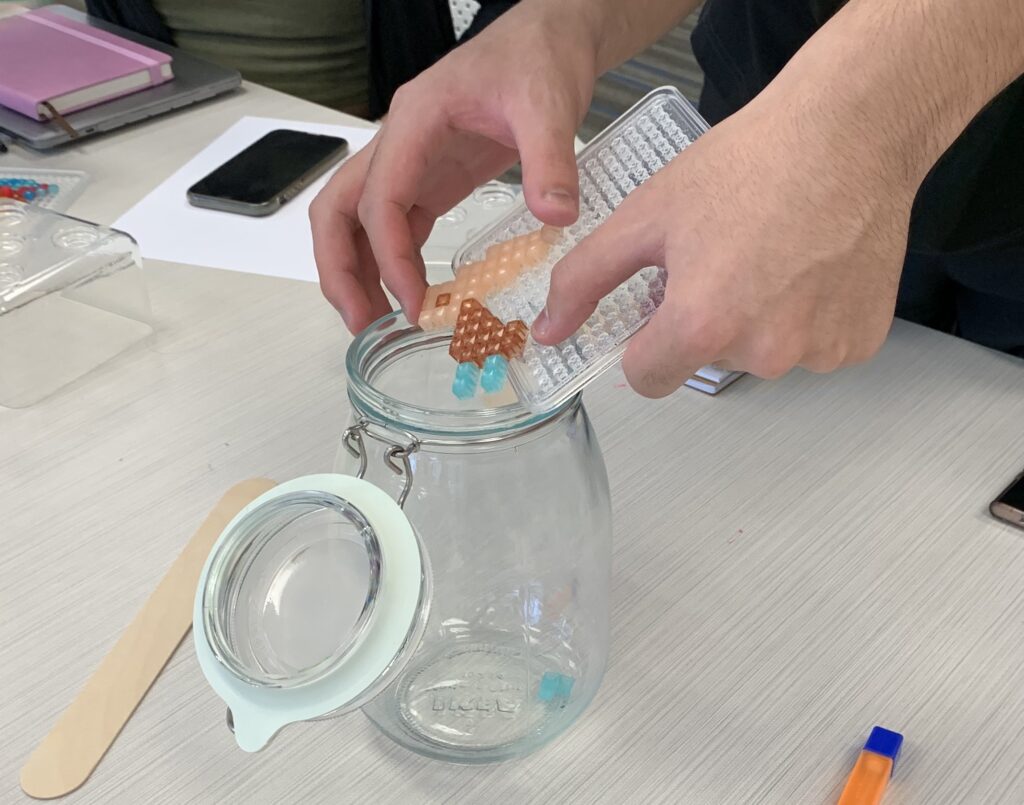
Retrieving one pixel, which is typically associated with another, triggers retrieving the whole cluster. This is the basic premise behind diffusion models. The pixels in the images carry a meaning that relates to their context when used together. For example, if there’s a request to generate an image of a heart, the retrieved pixels will likely have warm colors, as hearts are often depicted that way. Moreover, if you ask for a heart, it might speculate that hearts typically appear in the context of a human body and generate the surrounding anatomy or another relevant context, depending on the associated words.
4. Forward diffusion
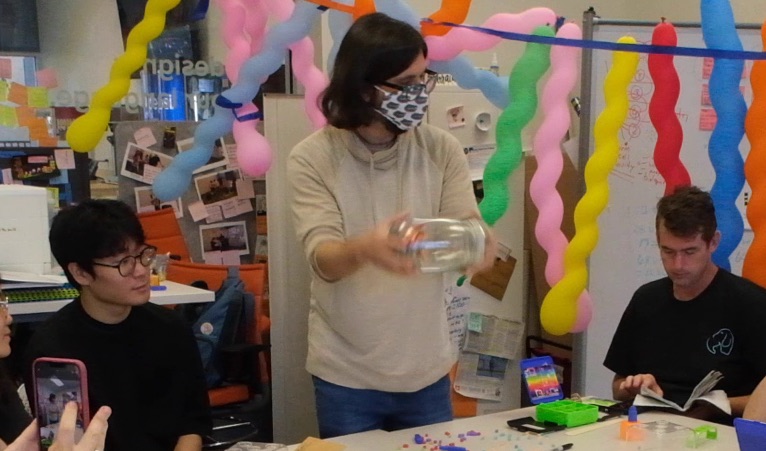
Shaking the jar equals to forward diffusion, or mixing up the pixels even further. The stickiest parts of the image still remains. It represents how generative systems dissociate some pixels while keeping others tightly connected by semantic association.
5. Denoising
The jar is opened and its content spread on the table.
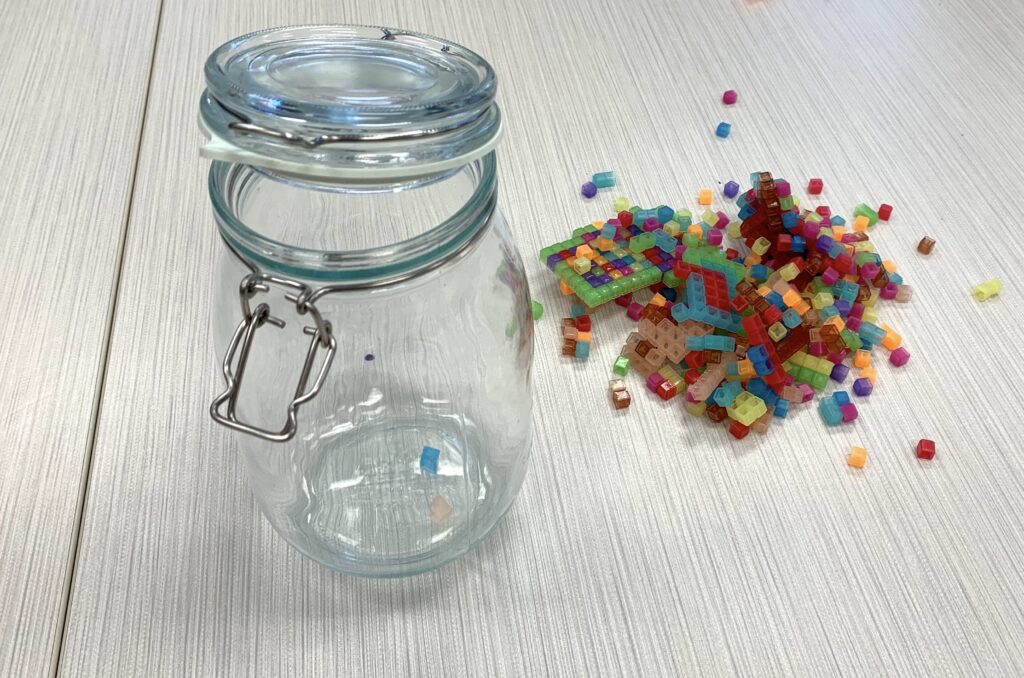
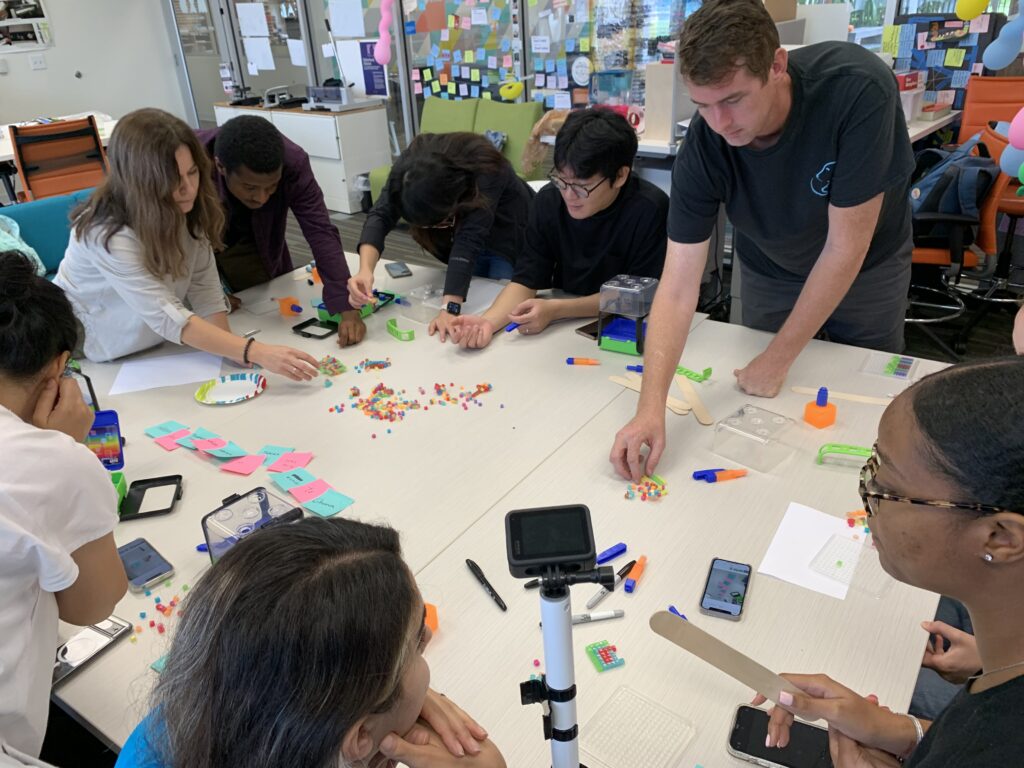
Players are grouped as GPUs. Each GPU generates one image. Within their groups, players reassemble images from the disrupted beads but they aren’t allowed to talk. They attempt to stabilize new visual forms guided by the collective prompt. Because memory is imperfect and interpretations differ, reconstruction becomes an act of negotiation and imagination. No original image is perfectly restored; instead, new variations arise. Here the embodied algorithm reveals something crucial: generation is not retrieval. The outcome is neither a copy nor pure novelty, but a plausible configuration shaped by constraints, guesses, and shared expectations
6. Stable diffusion
The resulting images are brought closer to the triggering prompt. The GPUs alternatives are ranked and voted. A discussion about the effect of the algorithm in the creation ensues.