Culture circles is a participatory educational method developed by Paulo Freire to foster literacy and critical consciousness through dialogue. It emphasizes horizontal, dialogical learning, where participants and facilitators engage as equals in analyzing their lived experiences and co-creating knowledge. The term “circle” underscores this horizontal structure, symbolizing equality among participants and rejecting the top-down dynamics of conventional education.

A key aspect of the culture circles method is its redefinition of culture as something created and shaped by all people, regardless of their literacy or educational background. In this method, participants are encouraged to see themselves not only as consumers of culture but as producers of it, capable of critically analyzing and transforming their realities. Freire believed that even those marginalized by systems of education and literacy possessed valuable cultural knowledge and experiences.
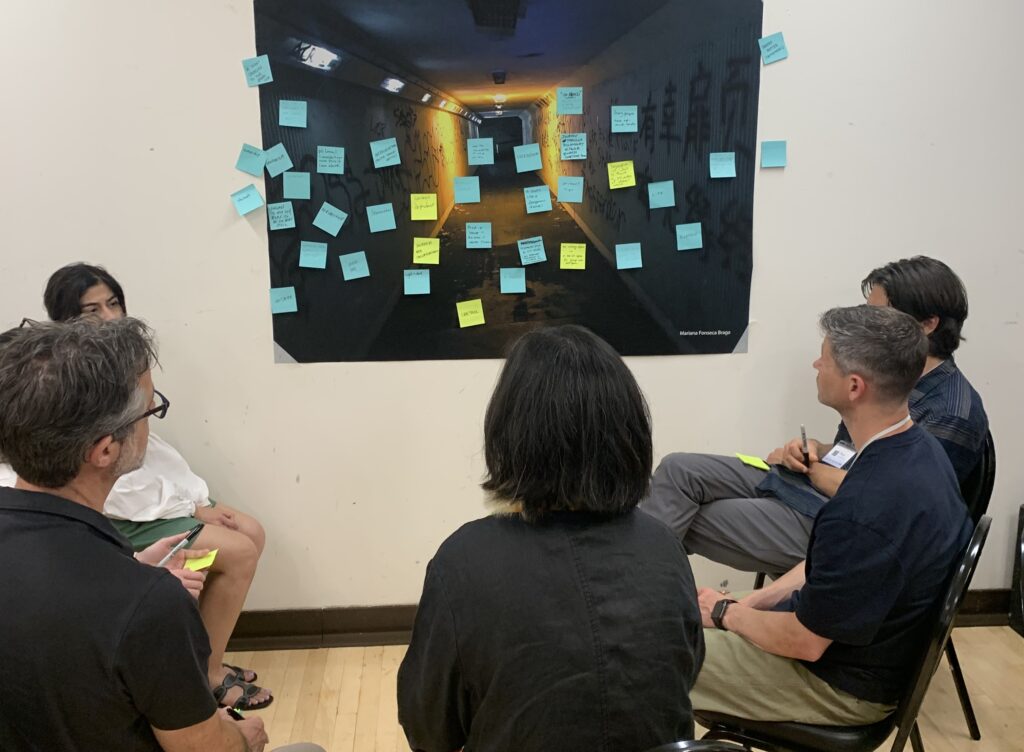
Freire introduced the culture circles during his literacy campaigns in 1960s Brazil, aiming to empower marginalized communities. Unlike traditional methods that treated learners as passive recipients of knowledge, culture circles encouraged active dialogue rooted in participants’ realities. Freire saw education as a means of liberation, and the circle provided a democratic space for participants to critically examine their social conditions and envision collective transformation.
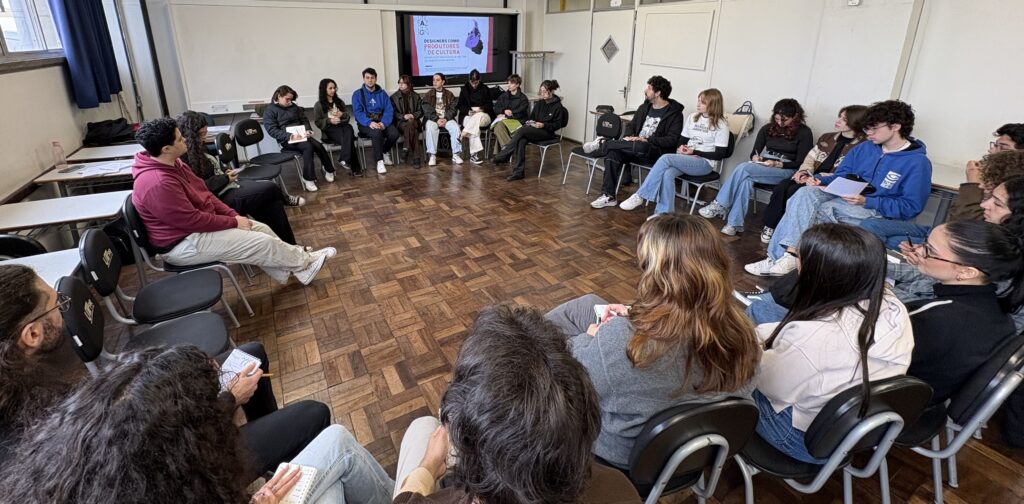
Culture circles are organized around generative themes that represent the contradictions learners experience in everyday life. A generative theme can be presented through words, images, objects, games, and theater. Through the process of decoding, participants analyze these themes in relation to broader societal structures. This dialogical exploration not only enhances literacy but also cultivates critical consciousness, making learning a transformative experience.
Design culture circle
Design culture circle is a method variation developed by Dr. Frederick van Amstel for the prospective design graduate program. Its main novelty is adding a dialectics between “reading the world” and “making the world” using generative mediations—such as images, words, tools, bodies, maps, objects, games, and videos—to make otherwise mundane contradictions visible.
The process begins deliberately by surveying naïve readings and makings of the world. Through repeated cycles of reflection, dialogue, experimentation, and remaking, participants progressively develop critical readings and critical makings of the world, amounting to the perception of worldmaking as a form of culture, design culture.
The ultimate goal of the design culture circle is to prepare a collective body to take hold of the many design cultures around it. Previous experiences become material for subsequent cycles, allowing the group to progressively recognize how their desires, behaviors, and possibilities for action were designed by the world they live in. Instead of boycotting, avoiding, or escaping that world, the design culture circle progresses until participants see themselves as potential (re)designers of that world, as producers of design culture.
It is therefore not simply a participatory design technique, but a consciousness-raising process through which a collective designer is born. Design culture circles are useful for design education, participatory design, ethnographic design, and any other project where culture, horizontality, dialogue, and critical consciousness are relevant.
Early documented examples:
- Design and Culture (2025)
- Design + Identity in Everyday Life
- Spring 2025 (Design) Research and Practice
References
Fonseca Braga, M., M. C. van Amstel, F., and Perez, D. (2024) Social Design at the Brink: Hopes and Fears., in Gray, C., Hekkert, P ., Forlano, L., Ciuccarelli, P . (eds.), DRS2024: Boston, 23–28 June, Boston, USA. https://doi.org/10.21606/drs.2024.1538
Phan, H.L., Jalali, A.,and Van Amstel, F.M.(2025) Designing the world precedes designing the word: The Paulo Freire Method applied to typography education, in Clemente, V., Gomes, G., Reis, M., Félix, S., Ala, S., Jones, D. (eds.), Learn X Design 2025, 22-24 September 2025, Aveiro, Portugal. https://doi.org/10.21606/drslxd.2025.091

