Abstract: Digital interfaces have replaced so many face-to-face interactions that we almost forget what we are missing. As users, we take action, send orders, and sometimes hurt other people without even knowing whose faces are on the other side of the “inter-face”. This habit is extending to analog interfaces as offline actions increasingly follow online patterns. People are losing their ability to make eye contact, share full presence, and mutually recognize each other. This is not a spontaneous habit. Most contemporary interfaces have a specific design that habituates users to adopt dress codes, roles, avatars, algorithms, and other kinds of social masks. In that way, systemic user oppression, or users oppressing other users, effectively hides or distracts from the injustices that sustain large-scale inequality systems. Within these systems, however, it is still possible to design otherwise.
Lecture recorded at the Symbiotic Hospitality program hosted by Timelab, Genth, Belgium. The full recording includes audience interaction in the end.
Full transcription
I came from Brazil a few days ago and wanted to share some reflections on an experience that connects with and intertwines with what’s going on here in Belgium. This visit is really an important historical moment, not only for me, as you can see from my excitement now, but also for everyone. And we might not realize it today. So let’s keep in touch and see how this unfolds.
Well, first of all, a little bit about my current work conditions and hopes. Brazil is a country that now spearheads democratic conflict resolution. And particularly, we fixed the far right problem by imprisoning our former president after a failed coup attempt. Yes. I’m really proud of that. And I wish that the United States would follow suit one day, maybe.
Anyways, we have a public university that is also founded on democratic systems. And it’s an everyday culture. As you can see in this picture, our students are learning design through a democratic process. They form groups and work together. They elect representatives. And they also create things together. In this case, they are creating a tactile musical experiment. They have to share an interpretation of a song they like with another person, using the tactile interface as a medium. For that, they need to synchronize their movements so that the other’s body would feel what it’s like the song to them.
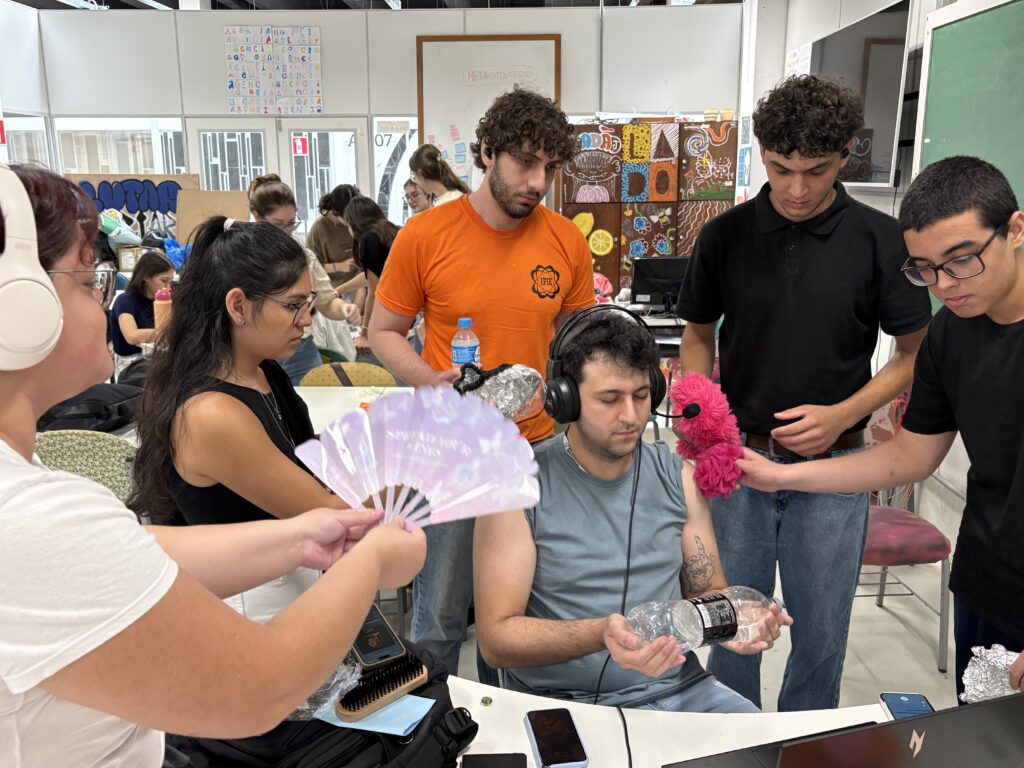
It’s a big challenge in terms of multi-sensorial design. It is an experiential challenge of learning what it is to be another person, feeling that same touch differently. It’s also an intercultural dialogue. Even in Brazil, there are differences in touch codes. Can you touch this part of the body? There are gender codes regarding these interactions. All of that is learned by talking, trying, making, and reflecting, all of which are important aspects of any democracy.
My priority as a design educator is to let our students become more conscious of their relationships with others, so they can design experiences as if they were designing human-to-human relationships and craft those relationships through their designs. Some people call this service design. As you can see on the right side, the most known examples are smartphone apps. Someone may conclude, “Oh, you are designing apps.” Yes, this is, let’s say, the tip of the iceberg. Beneath it, there is a lot of thought about what is behind those interfaces.

I want to draw you into this conversation that has been ongoing for almost 60 years, from industrial design focused on the object as an interface to service design focused on the interface as part of an object or an expanding object that goes beyond products, that sometimes reaches out to the point of product-service systems or even entire social structures.
Please follow my journey.
What is an interface? There are complex definitions coming out of fields like physics or ecological science (ecology). In computer science, this is reduced to the idea of a computer on one side and a user on the other. With this definition, we miss the fact that interfaces are interfaces to another interface, another interface, and so on, until you reach a person on the other end.
Sometimes in computer science or in common-sense discourses about computers, people might say that artificial intelligence is a new form of life. That’s not true. Artificial intelligence is just a computer talking to someone else’s computer. It’s a distributed network of computers communicating with each other. ChatGPT is thus strictly speaking not an AI but an interface. It’s not a new form of life. It’s not a self-sustaining or self-developing intelligence. It’s just a human language processing interface.
You type something, it responds back, and then you feel like you can go somewhere sometimes. Interfaces are typically conceptualized in human-computer interaction as manipulable representations of computers in its working. It’s almost like translating what’s going on inside to laypeople who don’t know what the computer is about. This is a naive model of what an interface is like. A person, a human being on the one side, the digital code on the right side, the inner workings of the computer, and the interface are mediating, translating, and incorporating actions or information from both sides.

The problem with this conceptualization is that it misses the fact that there is another face on the other side of the interface. Sometimes you need to dig, and dig until you find that face, because it’s hidden. It is hidden due to a macroeconomic and ideological process that conceals the other human being on the other side.
ChatGPT, for instance, relies heavily on manual labor from data trainers, data sorters, and moderators who work in faraway countries and are lowly paid. In this particular case, I’m featuring Kenyan workers who work for $2 an hour to make ChatGPT look autonomous and intelligent. Some of your prompts were not responded to directly by these workers; they responded indirectly, not at the same time.

We are often unaware of the social impact of such interfaces. Even if people now that every prompt requires, let’s say, 10 liters of water, the equivalent of flushing a toilet, this is not enough. The transational impact of AI work exploitation is as important as the environmental impact. In any case, both of them are hidden, concealed, behind that interface. And worker interfaces are completely different than user interfaces. Easy-to-use interfaces on the privileged side are built at the cost of hard-to-use interfaces on the infrastructure side, where the workers are.
I’m pushing forth with this talk, the foundation idea that interfaces are “inter-faces”, really, trying to bring back the human into this equation. A person on one side, a person on the other side: interfaces mediating their relationships in many different ways, with biases, advantages, disadvantages, formalities, informalities, and many other ways designed by humans on both sides. Some humans have more power than others over that design.

We’re going to get there in a minute. First, let’s discuss the differences between digital and analog interfaces. Despite all the hype, digital interfaces did not make face-to-face interactions outdated. That’s why I’m here at Timelab in person, and you as well. By the way, thank you very much for being here in person today, not just relying on the recordings. I’m also glad people will take a look at the recordings later, because it expands the local reach of this conversation.
In-person exchange is and will remain to be the original interface. If there weren’t Timelab, this event wouldn’t have happened. If I were just recording this in Brazil from my office, it would not mean the same. Being here in person with my flesh in this place is a public statement. Timelab is making that statement together with me because we want to have a conversation about these topics. That’s what it means to be here.
An artificial intelligence can never do what we are doing now. An AI cannot state anything. An AI may be intelligent to some degree, but it cannot stand politically for its views. We cannot have a true dialogue with an AI because it cannot talk to us face-to-face. An avatar that looks like a face is no more than a deceitful interface that gets in the way of how we relate to other people.
Digital interfaces, including AI chatbots, disrupted the evolutionary relationship we developed with other faces. We learn how to recognize faces almost immediately because our species has been trained in this for thousands and thousands of years. And then, suddenly, we’ve got these digital interfaces put in front of our faces, concealing everything else that is on the other side, just a few years ago. We felt the loss of human touch during the pandemic, not just individually, but also culturally.
We now accept mass surveillance in a way that we wouldn’t have 30 years ago. There were so many sci-fi movies that scared us like hell in the past that, nowadays, it just looks like the present. It’s no longer sci-fi. We already live in a surveillance dystopia. Back in those days, we were pushing against those policies, technologies, or smart city projects. Now no longer. We are losing opportunities to meet strangers and different people, to protest, to organize, or to do things that cannot coexist with mass surveillance. We are baited into trading privacy, self-care, and belonging for securitized access. We no longer believe that community is based on, let’s say, sharing a life. Instead, we believe community is built merely on shared safety. That’s probably going to lead us into situations where we might want to revise what we mean by living in a community.

Now moving to our children and the future of our own kind. Kids are now interacting with digital interfaces so heavily and without oversight. And even if someone is watching, persuasive messages may still go through because parents can no longer understand what they mean when they target kids. From a distance, they looks fine. If you pay close attention, you might see a lot of strange messages reaching kids that don’t have yet a critical filter.

That’s just what is going on in an ideological level. On the physical level, these kids are developing myopia much more than other generations. These kids are having trouble developing language. They are taking longer to speak because they don’t speak to those screens. What is going to be the future of our species if we keep educating children like this?
Let’s think about something that can alter our species even more deeply than this: genome editing and the possibility of industrial eugenics, or the selection of advanced human features, as its supporters call it. Designer babies depend on this basic technology, digital interfaces, which are so overlooked in this regard. Gene editing only became possible because of digital interfaces. A digital interface translates what DNA code means in easy to read, easy to interact language. It is not hard to imagine eugenist designers tweaking those interfaces to visually feature (in green and red) bad genes and good genes. This is a lot of power over future generations. We currently lack democratic governance for digital interfaces because they look transparent or even invisible. We don’t view interfaces as something to be debated at the policy level, let alone at the political level.

Well, such disruptions were not caused by technical limitations. Improving the technology, making it faster, making it, let’s say, less visible, making it seamless, integrated, won’t fix it. After researching this topic for so long, I found that the human recognition model behind it needs to be publicly debated.
Interfaces are designed based on how humans relate to each other. Hence, power relationships that appear elsewhere in society also manifest in interfaces. This is the interface model I found with other researchers: the coerced recognition model. I demand that you recognize me, or I demand that you let me recognize you, but never both, and never fully. It’s a unilateral recognition. One recognizes the other, but not both at the same time, and never fully. To recognize fully means that both recognize simultaneously. This fraught, deficient model for recognition induces us to treat other people as things, as taken-for-granted aspects of our lives, as if they were just the inner workings of a giant infrastructure.
However, when the person on the other side of the interface wants you to recognize them, they throw you a popup screen with no back button. Think about a terms and consent screens that ask us to accept those terms. We learn that, by recognizing the designers or companies behind them, or whatever kind of organization is there, we must interact in an obedient way. We have to follow the instructions. Otherwise, we might break something. We get careful where we click. We seek help and follow the interface metalanguage, its own usage instructions. We don’t stop to think who put these instructions in place and why. It’s almost like natural, unavoidable. We, users, are supposed to be served by design, as long as we remain users and only users, as long as we remain passive, as long as we don’t claim to redesign or change anything, as long as we follow the rules.
This deficient recognition model is fleshed out in design through many different methods, technologies, approaches, and theories. I’m going to feature one here. It’s called personas. Personas include imagined, fake, or research-based profiles of what a user of this future interface might look like. The profile typically includes a person’s age, nationality, preferences, likes and dislikes, context, and stories. Users who don’t fit the service’s personas are not well served. Even if you try using it, you might face disadvantages, or the system might tell you that you are no longer their target users, clients, or so on. For example, if you’re from another country and try using it, you may be blocked at some point because the service decided it’s not strategically or economically valuable to have your country’s access to this service. That happens so many times here, there in Brazil, when trying to access services provided by the Global North.
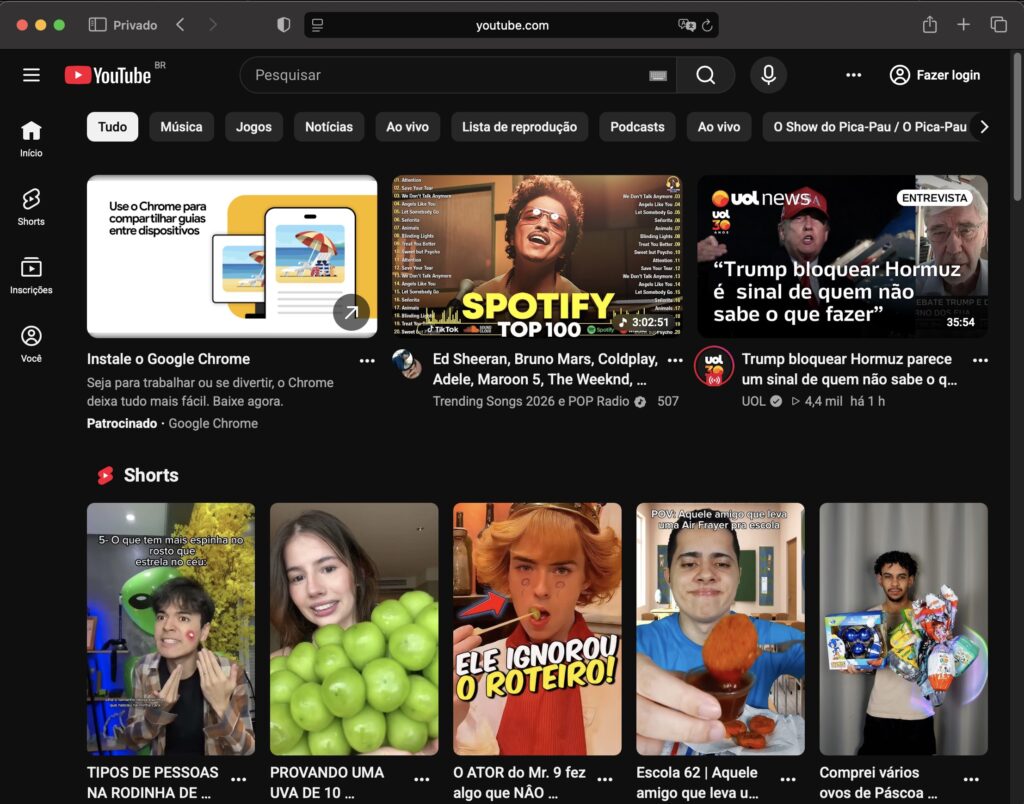
Here’s what YouTube looks like if I open it on a private tab of my browser app. YouTube is still targeting me in some way, even when I am not logged in. How in the hell do they still hold my data if I haven’t entered the login? You can imagine that they collect a lot of collateral data, data that is not attached to your consent, data that is attached probably to your location, to whatever they can mine and speculate about me as an anonymous user based on that data. This is the ideal home page where they control everything; I control nothing.
Think about that. I didn’t choose any of this personalization, right? If I’m logged in, I’m choosing, at least for the people who are conscious of how this works. For instance, I’m never clicking on some random clickbait videos because I don’t want more clickbait. Yet they show me a bunch of random clickbait because keeping me hooked is what they want from me.
Sometimes, users organize, revolt, protest publicly, and demand design changes. An interesting movement is underway now in Brazil: the Delivery Worker Movement. They work for a big platform labor service called iFood, which uses a gamified interface with all kinds of nasty, persuasive economic management systems, where couriers get the least amount of money from each transaction and are ready to risk their lives for almost nothing in return. Couriers originally didn’t get any services for working there. Then, they protested heavily in Brazil. With that, they demanded that the company provide them with public bathrooms, a place to warm our food, and a few seconds’ rest.
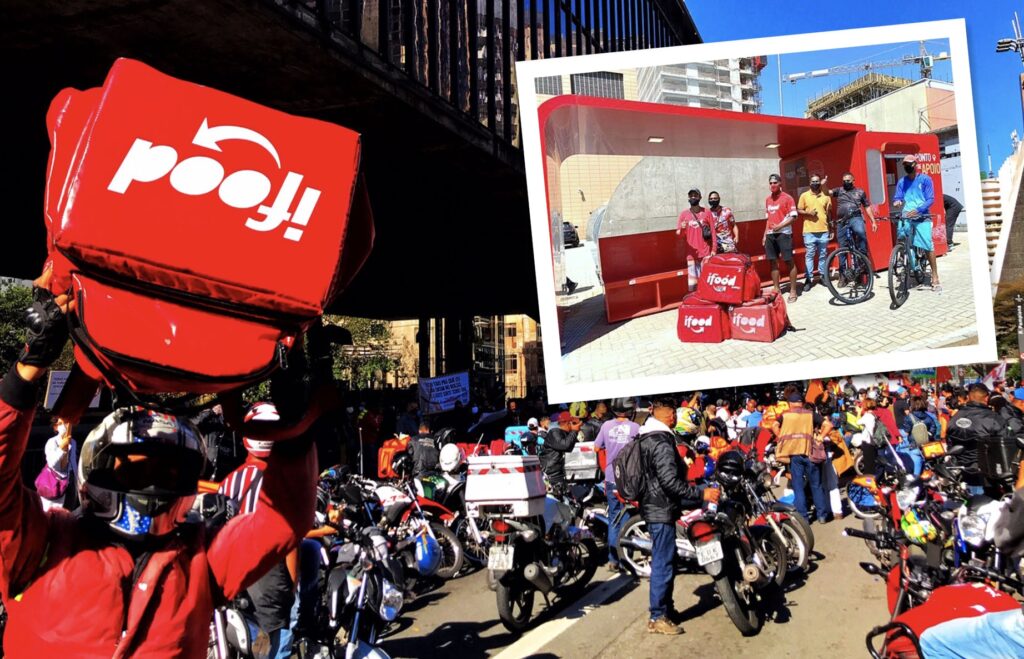
This is a kind of reverse service design, driven by users rather than designers. Usually, service design begins with the company and moves towards the users. But in this case, it’s the user designing the service from the ground up. To enable them to continue providing those services, not dying without having enough rest or without having enough food, and so on and so forth. They still have a lot to gain from this fight. But this is already an interesting example: users who usually don’t recognize themselves as designers of a system or an interface can become aware of their role in designing a service and demand designer rights or access to the service as a codesigner.
The personalization of my YouTube interface is equivalent to the micro-scale interface design work I do as a user. The Delivery Worker Movement is the macro level where collective design achievements are clearly visible. Users are always designing interfaces as much as designers, however, users are often unrecognized for that. That is why we say users are oppressed.
Yet, designers designing labor platform interfaces may also be oppressed, thus in a different way. The same Brazilian designer who designed an iFood interface using, let’s say, Adobe software might, in a few days or a few years, become heavily oppressed by restrictions imposed on Adobe Cloud, for example, as happened to Venezuelan designers in 2019. They weren’t able to open their files in Adobe Cloud. Imagine not being able to open anything in Google Drive or Dropbox. That’s what happened to them, just because the United States government blocked all access from that particular country. Designers are also users of design tools. That’s why becoming a critical designer begins by becoming a critical user of designed interfaces.
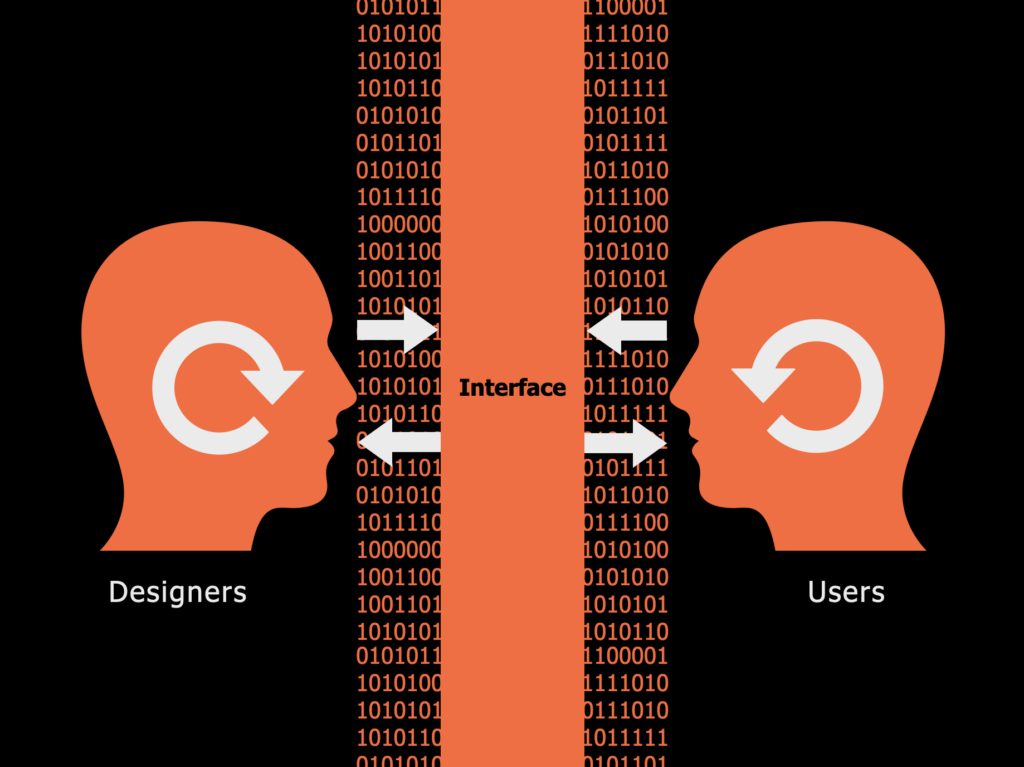
In this recognition model, designers look at users and vice versa as if they were like or unlike themselves. Designers compare themselves to imagined users or user data and assume users will behave exactly the same way they do, for the same reasons. Similarly, users believe that designers are like them. None of them can see the other side because the coercive interface works like a narcissistic mirror. The reflection only reinforces what is already stabilized.
Designers, as much as users, look at themselves in the mirror. But that mirror does not tell the truth. It is just a partial view. Every time you look at the mirror, you look at your face, but not your back. Hence, that image in the mirror is half the truth of who you are, which includes also how others see you in ways you cannot see. Because designers and users only see themselves in part, they fall in love with that image. From that point on, they prefer to engage with people who look like themselves. That’s the nastiest thing about this whole thing. The coercive interface model disables democracy, or accepting the other who poses a difference.
As feminists Bell Hooks and Simone de Beauvoir have shown, coercive love is not real love. Even if designers feel they have a lot of passion for their work, for crafting things, that’s not necessarily real love.
These insights are not just mine. I need to give credit now to the great people of this collaborative research network, Design & Oppression. I’m going to feature just three of my colleagues who are working on this topic. First, Rodrigo Gonzatto, the researcher behind the concept of user oppression. We’ve been looking at the history of human-computer interaction and found strong evidence that users are oppressed. Disenfranchised groups already oppressed in terms of race, gender, class, and/or body capacity are included in human-computer interaction, or service design, if you wish, as users. You hardly can find anything about black designers, women designers, people with disabilities that also design something. The reason is that there is an oppression going on, which is very specific to this current situation, the current world we live in, where everything has to go through these digital interfaces: userism.
After Gonzatto and I worked on this, I’ve got Mateus J. J. Filho looking at the philosophical roots of all this. He’s this marvelous genius researcher who’s able to read Frantz Fanon and Georg Hegel, and get something practical out of it. He’s amazing. He basically discovered this mutual recognition model we didn’t know about, because we were like, “all right, users are oppressed. We are heavy users of foreign technologies. We are screwed.” What is the way out? We didn’t have a clue until Mateus joined our group and said, “Fanon and Hegel have something relevant to say about that”. He got an award for his initial research project. A few years later, Fernando Secomandi and I collaborated to define this in great detail. We published a paper on the coercive recognition model in the Journal of Human Technologies Relationships, and we plan to continue this work in the coming years.
This network is also concerned and feels responsible for showing alternatives to this. We are not just denouncing oppression. We also want to announce liberation. How do we, users and designers, collaborate to liberate ourselves from coerced recognition?
This is still very sketchy, but the mutual recognition model is something like this. I recognize you freely recognizing me. Thus, I become a we. I’m no longer speaking only as an individual, but I’m also speaking as a collective. I’m going to share a few examples of my own practice that also relate to Timelab practice. I hope you’ll remember going through similar dilemmas at different points in your trajectories.
This was 2011. And we were thinking about how to scale up the experience of the Faber-Ludens Interaction Design Institute in Brazil. Faber-Ludens was a moment of inspiration when we wanted to do something similar to what was done in Ivrea and in Copenhagen. We tried to combine this with our Brazilian culture, and we ended up doing some crazy stuff with digital technology. This was the first time designers were getting interested in coding or robotics. And we wanted to share this experience with people who weren’t into design or weren’t into IT.
We had been running for almost four years at that time. We had a local impact, not a national one, which is hard in Brazil, as it is a continental territory. People were traveling from all parts of the country to visit us and wanted to bring interaction design back to their home communities. That is why we designed the Corais Platform. This was probably the first project that I went most deeply into mutual recognition.

Corais was designed after researching biomimicry, being inspired by natural ecosystem relationships, and treating human systems as ecosystems. “Corais” is how we call coral reefs in Portuguese. Coral reefs have mutualistic relationships in which one organism feeds on another’s remains. The process enriches both species. In the picture, clownfish are interacting positively with an anemone. Otherwise, if it weren’t a clownfish, it would be eaten by the anemone. The anemone benefits from having the clownfish around to provide nutritious waste, clean up debris, and protect it from anemone predators. As for the clownfish, the anemone tentacles protect them from predators.
We were inspired by mutualism in nature, and we thought that tools that existed for supporting collaborative work, like Basecamp, Google Drive, and OpenIDEO, and similar tools of those times, did not enable that kind of mutualistic interaction. Usually, they had a centralized interface where one person with more privileges controlled most things unidirectionally.
We thought it could compete using open-source software. So we built Corais out of the Drupal framework. It was quite an interesting hack. More than 200 modules are combined in a very strange way. We built with very few resources available. That was the power of free software at that time. We could compete with Google. Yes, those times were precious. We indeed had a lot of users migrating from Google Drive to our platform because we were all public. Everything that was posted on this platform had to be public and licensed through Creative Commons. You could not choose any other license. And that was the way how we expected—actually, we demanded—that users would also give back something to the community. Every project they would bring to the community would be available for other community members. In a similar way, coral reefs work.
At Faber-Ludens, we designed many different cards and frameworks for co-designing other things. And we started designing work processes. We had this UX cards deck that helped people co-design a methodology. That was a novelty in Brazil back then. Some people call it design thinking. In any case, that had a limited reach. Because companies would need to hire Faber-Luden’s to actually get the whole process going, we thought this was not a scalable approach. Consultancy based on in-person gatherings is very limited.
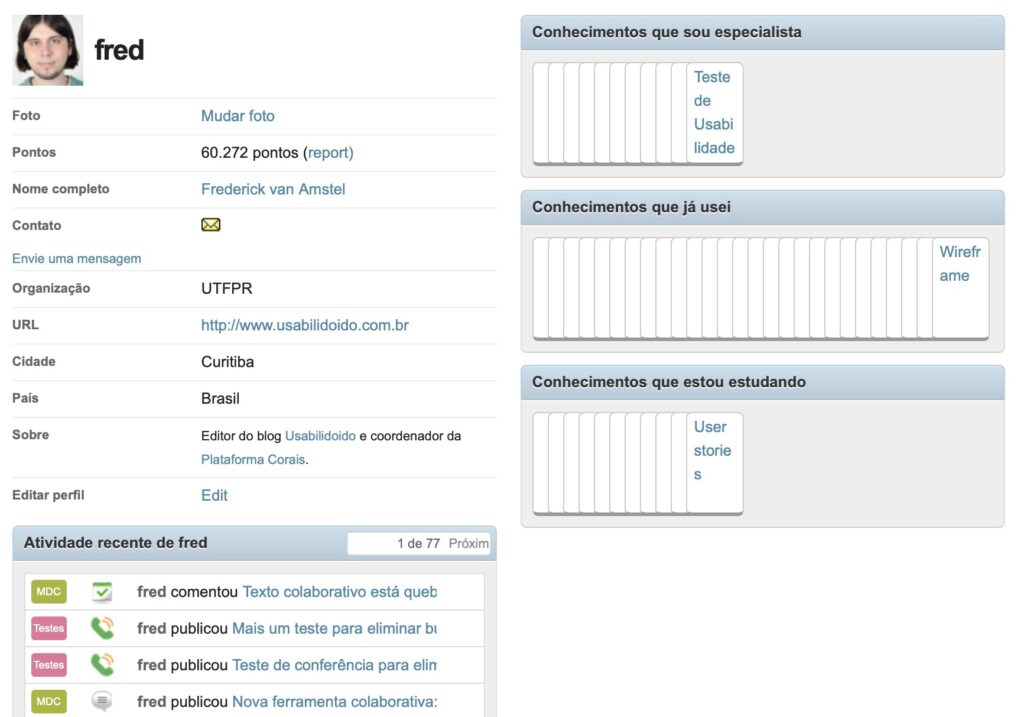
Corais made our consultancy knowledge open source. On this screen, you can see all the knowledge I accumulated on that platform and can share with others. So the cards that you would see on the table, they were there digitally represented. We wrote a book. It’s called “Design Livre.” And that’s a reflection about open design in Europe. We didn’t want to follow the same path. We attended some initial discussions and we thought that we had to be more closely connected to the free software movement as it was called in Brazil that was not aligned neatly with open source movement. We were really following, let’s say, Richard Stallman distinction between open design and free software. We thought that design should have an alternative to open design. We called it “Design Livre.” We didn’t translate into English on purpose because we wanted to emphasize this political choice.
In any case, this book was published in 2012. Faber-Luden closed its door that same year. It sounded almost like a closing manifesto, yet Corais lived forward. Corais wasn’t shut down because the users took over the process of designing it in a gradual way. Here’s how it worked. One day, I had this idea of opening a live chat box with users visiting the platform. Users could talk directly with the sysop or admin, as if they were an organizational insider. A lot of people started to flock in that chat. Of course, that wasn’t very well organized. We had to turn that into a forum so that we would have some more structured conversations. But at that point, a door was opened and the users understood that they could take over the platform and develop that from that point on. They started to propose new features for that platform. And then something really, really interesting happened there. We populated the metadesign forum. The whole platform had all kinds of projects, but this was the project of the platform itself. It was open publicly. Anyone could see what features we were working on at that time.
This particular feature was really interesting to develop in that way. One of the hosted projects was already running a mutual credit system in the platform. In their interaction design, one person defined the kind of community tasks that must be done. Someone would come and execute the task. A third person evaluated whether the task was actually done or not. A fourth person, who sometimes is the same as the first, made a credit transfer from the community bank to the user account.
The bank transfer was initially organized using spreadsheets in a very clumsy way. And then they asked me, can we automate these spreadsheets? Of course. Then they checked if there was already a Drupal model that could support us. Indeed, there was a mutual credit system module. We tweaked it. And the result is a very interesting social—let’s put it that way—solidarity economy system for communities who wanted to run cultural projects without relying on state money.

This was the time when no one was talking about blockchain. In any case, they started to exchange a lot of activities using that model where people have to recognize each other. It’s not just about the money. It’s much more about exchanging recognitions. Enabling that recognition through a digital interface, meant a lot. However, at the beginning, this worked best through analog interfaces. Platform members run many workshops around Brazil, particularly in the Northeast region where they were mostly active. In these workshops—I was never present—they taught each other how to use the system in a way that it made sense to them, not in the way I, as a designer, wanted them to know. I did not design any user manual. They wrote it themselves.
Finally, last but not least, this human recognition model is not just about individuals recognizing other individuals, but also collectives recognizing individuals. It’s the bank, the community bank, paying people for individual tasks. But also one community recognizing another community. Many of these projects have shared individuals who operate as a broker or a bridge between those projects. They would suggest mutual gatherings between those two different crowds, or at least some kind of synergies so that both projects will be strengthening their ties to their ecological systems.
Now coming back to the model that we proposed. Mutual recognition is almost like a critical mirror, a mirror which is reflection, challenge us to change. The mirror does not show who we are, but what we can become. We look at someone who is different from us, either as a designer or a user. We think, maybe I could change and become more like or unlike the other. If I’m too similar, I might become more different. If I’m already different, I might become even more different, just because I have a frame of reference. Just because I and the other have freedom to become who we are together, we are free from the user oppression.
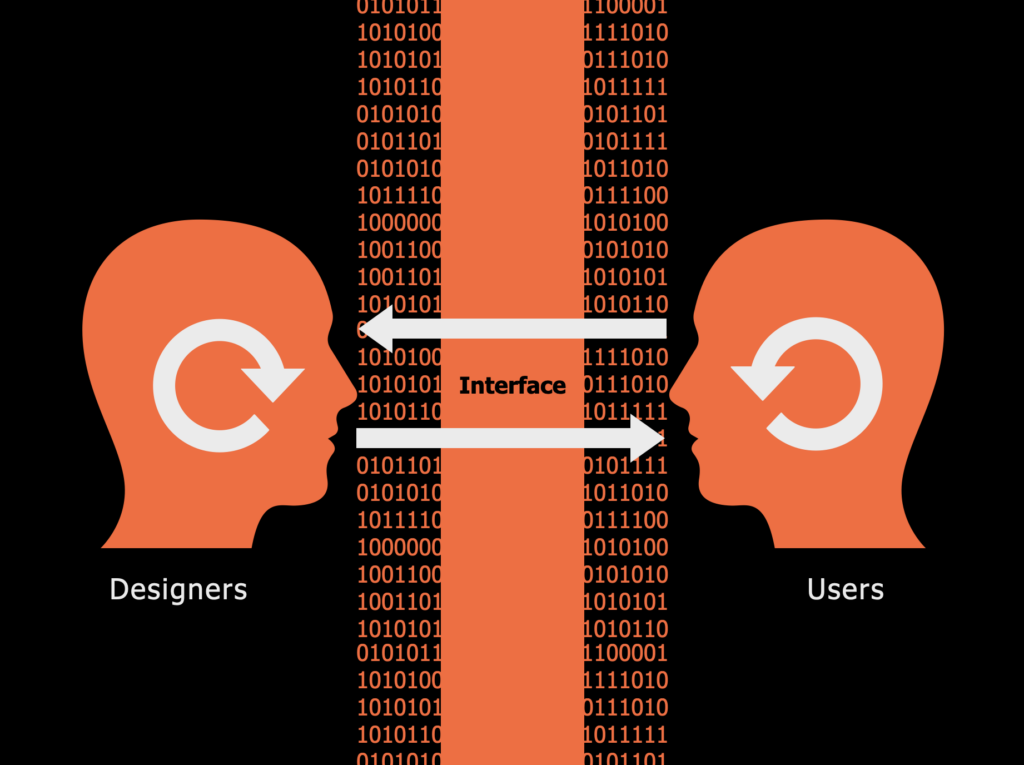
This is great, right? However, mutualistic interfaces must go beyond recognition. I don’t have ideas about that at this time. How about generating steady income? What about work safety? What about working conditions? What about so many other concrete things that work relies on? I have no exact answers to this. And it’s definitely a big challenge for solidarity economies. I
It also a challenge, how do we relate to non-humans or more-than-humans, or as I rather prefer to call them, other-than-human beings. Plants, animals, and microbes who are all around us, who are exchanging a lot of things with us, are not able to recognize us in the same way how we recognize them. We can see microbes, but microbes won’t be able to see us, unless we build a reverse microscope. That doesn’t make any sense, right? We must accept that recognition is not necessary for us to coexist in a mutualistic way with microbes. Coming back to coral reefs, there’s no proof that, let’s say, clownfish know what being an anemone looks like, and vice versa, but they still mutually exist. Mutualism is an existential project, not a technical gimmick. Please don’t get me wrong. I’m not talking about building more precise mirrors that reveal who we authentically are.
I take inspiration from René Magritte, the local artist, who actually has devoted a lot of thought about this. I’m happy to be in this particular locality now, where he’s been around 100 years ago or so. Magritte pushed forth in this work that the mirror being false or fake or the image being something which is not just the image, but a message about images, that these images, they lie to us. We have to be always quite critical about them, not just in this discursive or speech way, but also in a sensorial way. All his works invite us to challenge our senses and what we are getting from their perception, because it may be already trained to perceive in such a way that is not of our best interests.
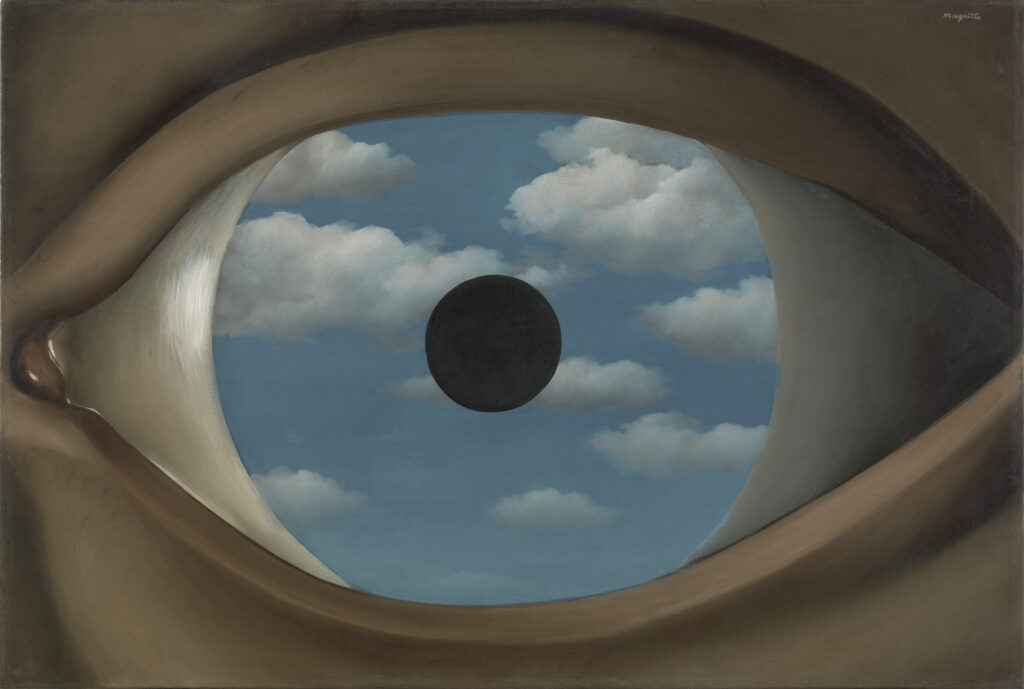
Magritte is also giving us hope that we don’t need to be perfect. We don’t need to reboot ourselves and get rid of everything we’ve learned so far on how to behave. For example, masks. We rely a lot on masks for social interaction, like saying things we wouldn’t say otherwise, just because we are in certain situations. For example, if you’re in the United States and someone asks you, how are you, you’re not supposed to respond authentically. You should not say like a Dutch person, “I’m feeling terrible, I’m tired”. No, you should say, “OK” or answer back with a “How are you?” You can answer back with the same question, because it’s just about wearing social masks at that moment.

Afterwards, maybe they might engage into a true dialogue. It’s fine that we wear masks as long as everyone agrees that we wear masks. That is what I get from Magritte’s “The Lovers.” It’s ok to wear masks as long as we made them publicly and acknowledged them and then we can redesign those masks.
We become the masks we wear as much as we become the computers we use, and the ecosystems we nurture. I’m not separating being and knowing now, which is a very interesting insight from Hegel. When we are what we know and we know what we are, then we have achieved a higher consciousness, because we take responsibility for what we are. Interface is what we are as human beings. We are always in between other humans. Taking responsibility for what we are, well, that’s what I believe to be the ultimate ethical challenge of any kind of design.
I gave you here a brief perspective from service design. But I do believe that the implications of this research, of this activist design activity, of this, let’s say, personal and collective trajectory, goes beyond the design of computer applications or digital interfaces. We can also think about mutuality in terms how do we relate to the environment? How do we relate to other worlds? How do we relate to the history and the future as part of history?
With those words, I just want to stimulate more dialogue. Because it’s very hard to wrap up this talk and feel like this is done, and feel like I know what it takes for us to have a mutualistic interface if I’m not being mutual with my audience, if I would just end up here and go away and wait for, I don’t know, some kind of late talk that wouldn’t work. I really want to engage now in a conversation. So thank you very much so far. And let’s have a conversation.
Note: The full recording includes audience interaction in the end.
References
OpenAI Used Kenyan Workers on Less Than $2 Per Hour, Time Magazine https://time.com/6247678/openai-chatgpt-kenya-workers/
Paulo Filho, Mateus, J.J., Van Amstel, F. (2022). Design para o reconhecimento mútuo do trabalho em organizações autogestionárias. Anais do XXVII Seminário de Iniciação Científica e Tecnológica da UTFPR.
Secomandi, F., & Van Amstel, F. M. C. (2025). Coerced Recognition at the Service Interface: A Design Ethics Framework for Unveiling the User Oppression. Journal of Human-Technology Relations, 3, 1–25. https://doi.org/10.59490/jhtr.2025.3.7745
de Siqueira, I. L. M., & van Amstel, F. M. (2023). Service design as a practice of freedom in collaborative cultural producers. In Proceedings of the Service Design and Innovation Conference (ServDes 2023), Rio de Janeiro. pp. 315-325. https://doi.org/10.3384/ecp203016
Gonzatto, R.F., van Amstel, F.,and Jatobá, P.H. (2021) Redesigning money as a tool for self-management in cultural production, in Leitão, R.M., Men, I., Noel, L-A., Lima, J., Meninato, T. (eds.), Pivot 2021: Dismantling/Reassembling, 22-23 July, Toronto, Canada. https://doi.org/10.21606/pluriversal.2021.0003
Van Amstel, F., Sâmia, B., Serpa, B.O., Marco, M., Carvalho, R.A.,and Gonzatto, R.F.(2021) Insurgent Design Coalitions: The history of the Design & Oppression network, in Leitão, R.M., Men, I., Noel, L-A., Lima, J., Meninato, T. (eds.), Pivot 2021: Dismantling/Reassembling, 22-23 July, Toronto, Canada. https://doi.org/10.21606/pluriversal.2021.0018