A quick guide to this thesis:
- Basic definitions
- Visual thinking
- Comparison to other approaches
- Historical relevance
- Practical examples
- Post-defense reflection
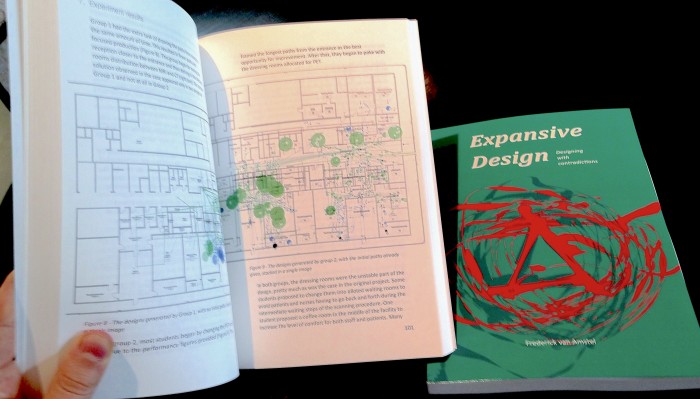
Abstract: This thesis looks at the practice of design as it emerges in architectural design and service design. The lens adopted considers design both as an activity as well as a space full of contradictions, which are accumulated tensions. Design activity is a professional occupation that interacts with other activities, whereas design space is a range of possibilities considered for a project. The contradictions in both sides are separately identified and then rejoined to follow the transitions from one side to another. When pursuing this dialectic, this research has found two ways in which design reproduces contradictions in society. The first, reductive design, aims to reduce contradictions by partitioning the design space into small manageable parts. The second, expansive design, aims to expand contradictions by increasing awareness for the possibilities in the design space. The former ignores, hides, or removes contradictions from the design space and the later uncovers, highlights, or takes advantage of contradictions in the design space. The combination of reductive design and expansive design leads to uneven development. This understanding of design comes from three short-term empirical studies of architectural design and service design projects, which were complemented with two experiments undertaken with design students. The empirical studies show evidence that expansive design may emerge from playing design games; however, this also depends on the willingness of participants to deal with contradictions in an inclusive way. The main contribution of this thesis is highlighting and developing further the concept of expansive design, which implies dealing with contradictions in an inclusive way.
Get access
- Download the PDF (18MB – searchable)
- Download the thesis in EPUB format (suitable for e-book readers)
- Order a hardcopy: US, UK, Brazil
- Navigate through the thesis open data
How to cite
Van Amstel, Frederick M.C. (2015) Expansive design: designing with contradictions. Doctoral thesis, University of Twente. https://doi.org/10.3990/1.9789462331846
Slides summary
Thesis background in plain language
Blog posts written as a sketch for its socio-cultural context:
- The expansion of the design object
- The contraction of design representations
- The socialization of the design space
- The alienation from design possibilities
- The co-creation of knowledge
- The optimization of work processes
- The flexibilization of workspaces
- The spatialization of workflow
- The competition for exchange value
- The collaboration for use value
- The homogenization of differences
- The emergence of boundaries
Key findings
- Design is an activity that interacts with other (user) activities by means of representations of space — floor plans, diagrams, scale models, and others. These representations of space can be used as instruments to gather information from other activities (programming) or become a shared object with other activities (participatory design).
- The representations of space imply a space of possibilities — also called design space — with the following features: problems, solutions, visions, constraints, scenarios, stakes and consequences. This space is disputed by many activities and the design activity has no full control over it. By interacting with this space, the activities reproduce their own historical contradictions, which become embedded into this space. The space of possibilities has, therefore, an abstract existence —problems, solutions, constraints — and a concrete existence — contradictions.
- The space of possibilities does not contain all the possibilities of space, though. There are many possibilities that are not represented, or even conceptualized, by design activity. Hence, the space of possibilities is smaller than the actual possibilities of space. If space is understood as a set of social relationships, the possibilities of space include the following features: decision; distance; coexistence; encounter; appropriation; identification; imagination; alienation; friction; marginalization; assembly; demarcation; resistance; and, attachment. These relationships exist among the people involved with this space, but they might not be aware of them. When people become aware of these spatial relationships, they may bring them to the space of possibilities to evaluate, reject and prepare for change.
Considering these findings, expansive design consists of: a) turning the space of possibilities into a shared object between the design activity and other activities; and, b) shaping the space of possibilities in a way that unexpected possibilities of space can be further realized or created. In a nutshell, expansive design means designing with contradictions.
Conditions for expansive design
Organizations wishing to promote expansive design may consider the following conditions:
Open-ended games employed in collaborative design may trigger expansive design. Games propose a minimum structure for interactions between participants of collaborative design that can still generate visible consequences. A reflection about the consequence of not interacting in a certain way may push participants to actually engage with such an interaction. For example: the conversational interaction between architects and users in Chapter 1.
People can learn dealing with contradictions by playing games about social conflicts. Dealing with conflicts is a skill to be developed. However, going through conflicts in practice can be painful. Playing out conflicts is an opportunity to relate to existing conflicts in a safer way or to try out possible conflicts. The pretext of play allows participants to have an excuse for being sharp in their jokes and telling things they would not tell otherwise. Chapter 2 has some evidence of this, especially in the environmental centre project.
Ambiguity stimulates people to develop their own meaning out of contradictory situations. Contradictions do not have solutions. Therefore, dealing with them in terms of certainty of meaning might intensify their tension instead of alleviating them. Ambiguity is a resource that can be used to stimulate recognising both sides of a contradiction and, perhaps, supports the development of the third, the creative change, which is, by definition, unknown. The parametric design tool of Chapter 3 has this ambiguous characteristic but, nevertheless, could not guarantee that every student work produced a third.
Embracing uncertainty ends the anxiety for closure. The feeling of discomfort for being under conditions of uncertainty can be reverted by embracing uncertainty as the condition for the development of the third. Contradictions do not have a pre-defined manifestation as it is constantly generated by the interaction of opposites. Understanding this characteristic of contradictions reduces the anxiety for closure and control that design activity typically produces. This was partially realised by the designers of the medical imaging centre (Chapters 1 and 2) when they brought users in the design process and dealt with contradictions in a productive way.
Recognising that contradictions cannot be solved helps to move on when the process is stuck. The emergence of a third element in the dialectic process cannot be forced. The process is stuck when the opposites are considered in an alternative fashion, each one trying to rule the other in their turn. Switching to another topic can skip the polarisation for a while and they return back to it once there are new elements to play by. Some of the design students who participated in the experiment of Chapter 3 displayed this behavior. They iterated between designing space and activity, switching perspectives every time.
The prioritisation of use value in favour of exchange value raises motivation for both designers and users. Working for the production of exchange value is one of the main frustrations of capitalist workers. People like to believe they work for something else other than money. Refocusing the work motivation structure towards prioritising use value, instead of exchange value, might help connect designers and users to a common object. This was an insight that came from the experiment with the hospital board game of Chapter 4.

Theoretical contributions
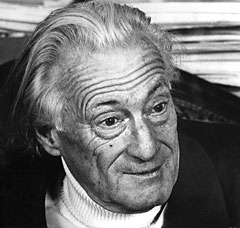
This thesis is based on the combination of two theories: cultural historical activity theory and the production of space. The first one was systematized by Yrjö Engeström, a contemporary psychologist working across multiple fields, whereas the second was proposed by Henri Lefebvre, a sociologist and philosopher who died in 1991. They both share Marxist and Hegelian roots, yet developing a critical view towards them.
The combination of these two theories brings them closer to design theory, yet leading to an uncommon notion of design. According to my thesis, design is not imposed on activity and space, but a phenomenon that emerges from the dialectical development of activity and space. This notion may luckily help design theory overcomes the determinism versus indeterminism debate regarding the relationship between design and use.
According to the thesis, design comes from contradictions, as a means to overcome contradictions but also as a product of them. Depending on the way these contradictions are dealt, two types of design emerge: reductive design and expansive design. The former try to reduce contradictions while the latter aims at expanding contradictions. Contradictions become then a central concept for design theory, working as an alternative to the cognitive, semiotic, and ergonomic explanations of design emergence.
Although the thesis does not aim to make a contribution back to the original theories, it represents a fair approximation between them, laying out a path for future studies of space in activity theory and studies of activity in space theory.
Practical contributions
Two practical tools have been developed to support the expansive design practice in construction projects. The first is a low-tech-to-high-tech visualization process for walking paths. Architects like to make sketches of user paths. However, if they take it too seriously, they end up with a “spaghetti” diagram, which is actually what lean design professionals recommend. Information gets lost or outdated easily in such diagrams. The parametric tool store this information in the design model.
The second is a serious game about conflicts of interest in hospital construction. Some players forget to store information, some hide information, and some take the initiative to create shared repositories of information. It is possible to see through the game the impact of personal strategies, official roles, construction contracts, and databases in information sharing practices. If the players succeed in the game, they learn how to deal quickly with the conflict of interests that are inherent to this kind of collaboration.

Methodological contributions
The thesis adopted and developed further several design/research methods:
- Regressive-progressive historical analysis
- Formative intervention
- Double stimulation experiments
- Video-based interaction analysis
- Issue-Based Information System (IBIS)
- Serious gaming
- Problem Solution Problem (PSP)
- Low-tech visualization
- Design games
Linked publications
The thesis amasses together four journal papers, published or under evaluation at the time of defense:
- Expanding the representation of user activities (Building Information & Research)
- Games to explore the possibilities of space and the space of possibilities in service design (Simulation & Gaming)
- Expensive or expansive? Learning the value of boundary crossing in design projects (Engineering Project Organization Journal)
- The social production of design space (Design Studies)
Open data
Part of the data that is part of this thesis is available online for browsing.